 Weekly Deals
 Water Heaters
 Accessories
 Installation
 Parts
Parts
 Protection Plans
 Final Sale


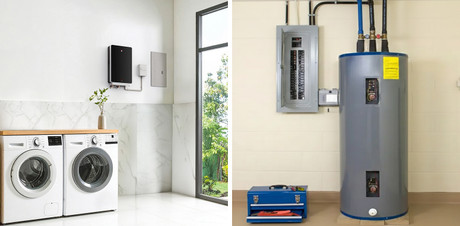


Tankless vs. Traditional Water Heater: Which Is Better for Your Home?
Updated August 2026 – This guide was expanded with a clearer side-by-side comparison of tankless and traditional water heaters, including energy use, upfront and long-term costs, hot-water capacity, installation needs, maintenance, expected service life, and a practical five-step process for choosing the right system for your home.
A tankless vs. traditional water heater comparison usually comes down to upfront cost, available space, energy use, and how much hot water your household needs at once. Tankless models suit homeowners who value efficiency, compact equipment, and continuous hot water within the unit’s rated capacity. Storage tank models remain practical when lower initial cost and a straightforward replacement matter most.
Neither option is automatically better for every home. In this guide, we’ll compare how both systems work, what they cost to own, and how to choose based on your household’s actual hot-water use.
Key Takeaways
- Tank water heaters usually cost less to purchase and replace.
- Tankless systems avoid the standby heat loss associated with stored hot water.
- A tankless heater supplies continuous hot water only within its rated flow capacity.
- Tankless sizing depends on simultaneous flow and required temperature rise.
- Installation conditions can have a major effect on the total conversion cost.
- The right choice depends more on your home and usage than household size alone.
Tankless vs. Tank Water Heater at a Glance
|
Comparison Factor |
Tankless Water Heater |
Traditional Tank Water Heater |
|
How it works |
Heats water as it flows through the unit |
Heats and stores a fixed volume of water |
|
Capacity measure |
Gallons per minute at a stated temperature rise |
Tank volume and first-hour rating |
|
Upfront cost |
Usually higher, especially for conversions |
Usually lower for a similar replacement |
|
Energy use |
Avoids storage-related standby heat loss |
Uses energy to maintain stored water temperature |
|
Hot-water supply |
Continuous within the unit’s capacity |
Limited by stored volume and recovery rate |
|
Space |
Compact and commonly wall-mounted |
Requires floor space for the storage tank |
|
Installation |
May require fuel, venting, or electrical changes |
Often simpler when replacing a similar unit |
|
Service life |
Commonly longer when correctly installed and maintained |
Commonly shorter, though results vary |
|
Best fit |
Efficiency, limited space, long usage periods |
Lower initial cost and strong short-term delivery |
How Traditional Storage Water Heaters Work
A traditional water heater stores heated water in an insulated tank. When you open a hot-water fixture, water leaves the tank and cold water enters to replace it. The burner or electric heating elements then restore the tank to its set temperature.
This design makes a ready supply available, but the stored water gradually loses heat. The heater must cycle periodically to maintain the selected temperature, even when nobody is using hot water. This energy use is known as standby heat loss. Storage heaters may use electricity, natural gas, propane, or another approved fuel, depending on the model.
How Tankless Water Heaters Work
A tankless water heater, sometimes called an on-demand or instantaneous water heater, activates when it detects sufficient water flow. Cold water passes through a heat exchanger and is heated by gas combustion or electric heating elements before traveling to the fixture.
The unit does not maintain a stored supply, which reduces standby heat loss. It can continue heating water for an extended period, but only within its rated output. If household demand exceeds that output, flow or outlet temperature may be affected. For a deeper explanation, see how tankless water heaters work.
Which Is Better: A Tankless or Traditional Water Heater?
A tankless water heater is often the stronger choice when you want to reduce storage-related energy loss, recover usable floor space, or support long periods of hot-water use. It must be properly sized for your incoming water temperature and peak simultaneous demand.
A storage tank water heater may be better when you need the lowest practical replacement cost, your home already supports a tank installation, or you need a large volume delivered over a short period. A correctly sized tank can serve several fixtures until its stored supply is depleted.
The decision should not be based on household size alone. Consider which fixtures run together, how cold the incoming water becomes, your available fuel or electrical capacity, installation changes, maintenance expectations, and how long you plan to own the home.
Energy Efficiency and Operating Cost
Tankless systems heat water when it is requested, so they avoid the standby heat loss created by storing hot water. The actual savings depend on the model, fuel price, hot-water use, incoming water temperature, installation quality, and maintenance.
ENERGY STAR’s 2026 guidance estimates that a certified gas tankless water heater can save a family of four about $95 per year compared with a standard gas storage model. That estimate should not be applied to every household, fuel type, or product.
Compare the Uniform Energy Factor (UEF) of specific models rather than assuming every tankless heater is equally efficient. A higher UEF indicates more efficient energy use under the applicable test procedure.
Upfront Cost and Total Cost of Ownership
Traditional tank water heaters usually have the lower initial price, especially when one tank unit replaces another in the same location. The existing water, fuel, venting, and electrical connections may already suit the replacement.
A tank-to-tankless conversion can cost more if the home needs changes to gas supply, venting, electrical service, wiring, water connections, or the installation location. Requirements vary by model and property.
Operating savings alone may not quickly recover every conversion cost. Compare written installation estimates, estimated energy use, expected maintenance, warranty coverage, and likely service life. A tankless system may provide better long-term value, but it should not be presented as a guaranteed financial payback.
Hot-Water Performance and Capacity
A storage heater’s capacity is described by more than tank volume. Its first-hour rating estimates how much hot water the unit can deliver during a busy hour, including stored water and water heated during recovery.
Tankless capacity is measured in gallons per minute (GPM) at a stated temperature rise. Temperature rise is the difference between the incoming water temperature and desired outlet temperature. Colder incoming water requires the heater to add more heat, which can reduce the available flow from the same unit.
Add the flow rates of fixtures that may operate together, then match that demand at the required temperature rise. Eccotemp’s tankless water heater sizing guidance explains the factors that should be reviewed before selecting a model.
Continuous Hot Water Does Not Mean Unlimited Capacity
A properly sized tankless heater can deliver hot water continuously because it is not limited to a stored volume. It cannot supply unlimited flow.
For example, a unit may comfortably support one shower but struggle when another shower, dishwasher, and sink operate at the same time. The result may be reduced flow, a lower outlet temperature, or inconsistent performance.
This distinction matters for busy households. Count simultaneous fixtures instead of choosing a unit only by the number of people in the home. Use the model’s performance information at your required temperature rise, not its maximum advertised GPM by itself.
Does Tankless Mean Instant Hot Water?
Tankless and instant hot water are not the same thing. A tankless heater begins heating after water flow activates the unit, but water already sitting in the pipe between the heater and fixture must still travel out.
The waiting time depends largely on pipe length, layout, and flow rate. A distant bathroom may still take time to receive hot water, even with a tankless system.
Point-of-use heaters and properly designed recirculation systems address different hot-water delivery concerns. They should be evaluated separately because product compatibility, energy use, installation requirements, and local plumbing rules can vary.
Space and Installation Requirements
Tankless heaters are compact and commonly mounted on a wall. This can free space in a utility room, garage, basement, or approved installation area. Outdoor installation is possible only with a model specifically designed and approved for outdoor use.
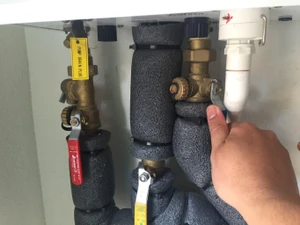
Installation requirements depend on the exact heater. Gas models may require suitable gas supply, combustion air, venting, condensate handling, and electrical power. Electric tankless models may require substantial dedicated electrical capacity.
A qualified professional should confirm model requirements, permits, utilities, clearances, venting, and local codes. Eccotemp’s tankless water heater installation checklist can help you prepare for that conversation without replacing the product manual or professional assessment.
Maintenance and Expected Service Life
Both types of water heaters require maintenance. Storage tanks may need sediment management and inspection of components such as the temperature and pressure relief system. Tankless units may need inlet-filter cleaning, inspection, and descaling based on water quality and the manufacturer’s instructions.
Hard water can increase mineral buildup inside a tankless heat exchanger. The correct maintenance interval is model-specific and may change with usage and local water conditions. Avoid treating a six-month or annual flushing schedule as a universal requirement.
ENERGY STAR’s current guidance lists a life expectancy of about 20 years for gas tankless water heaters. Actual service life for either design depends on installation, water quality, use, maintenance, and repair history. Review the tankless maintenance checklist for a more detailed planning resource.
Gas vs. Electric Tankless Water Heaters
Fuel type can change the comparison. Gas tankless heaters often support higher whole-home demand, but they require an approved fuel supply and model-specific venting. Electric tankless heaters avoid combustion venting but can require significant electrical capacity.
Your existing utilities may make one option more practical than the other. A home with limited electrical service could face substantial upgrade work for a high-output electric model. A gas conversion may require fuel-line or venting changes.
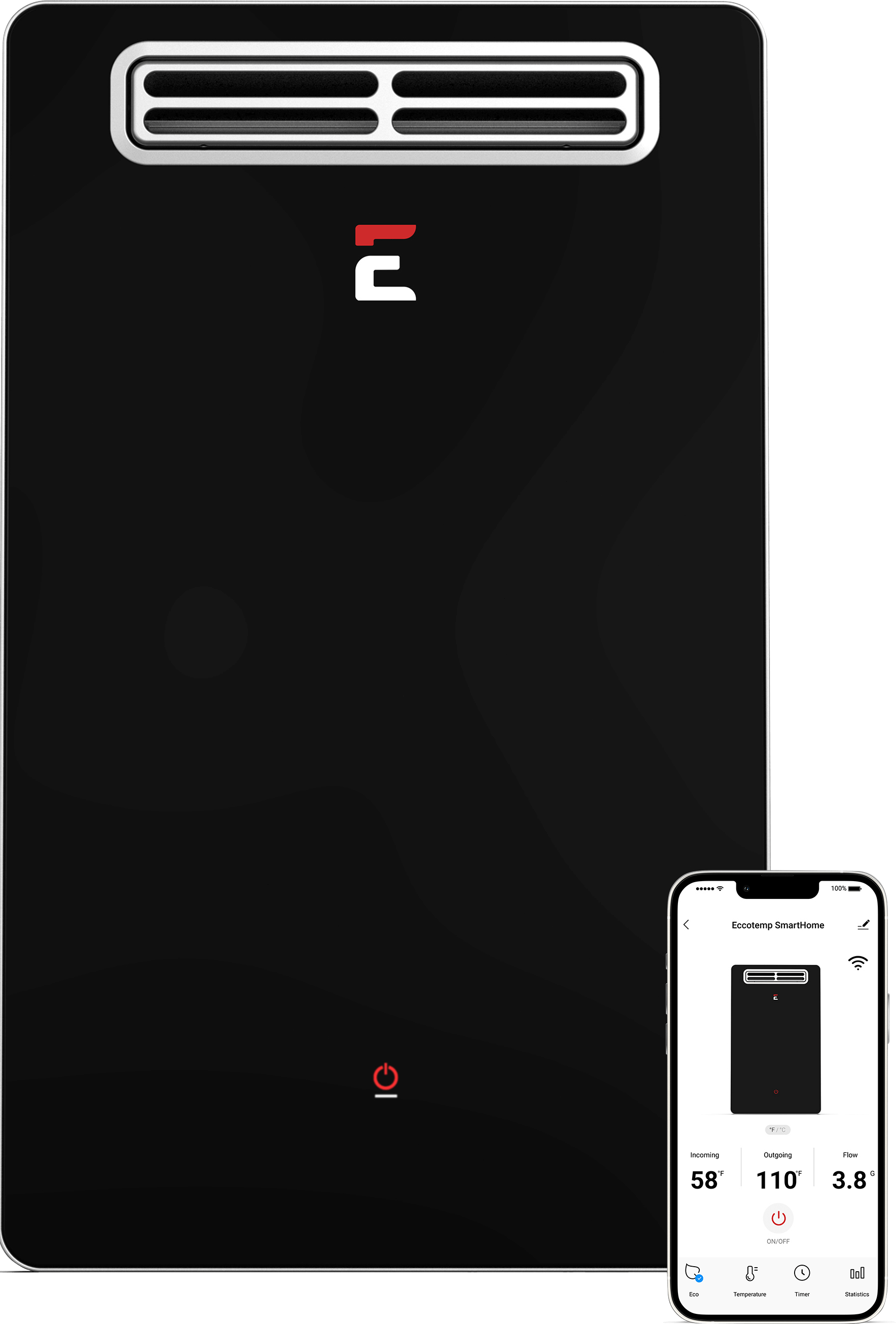
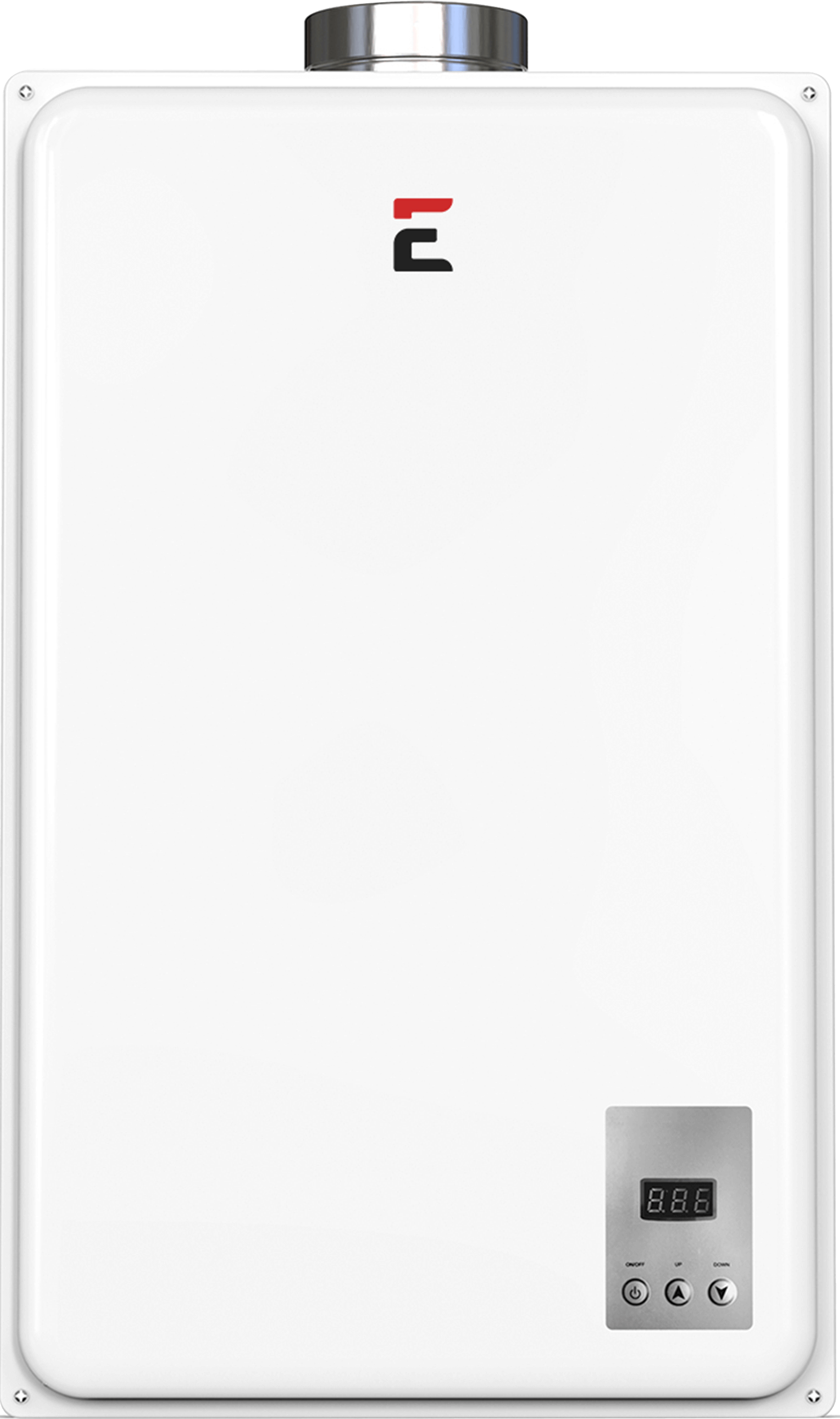
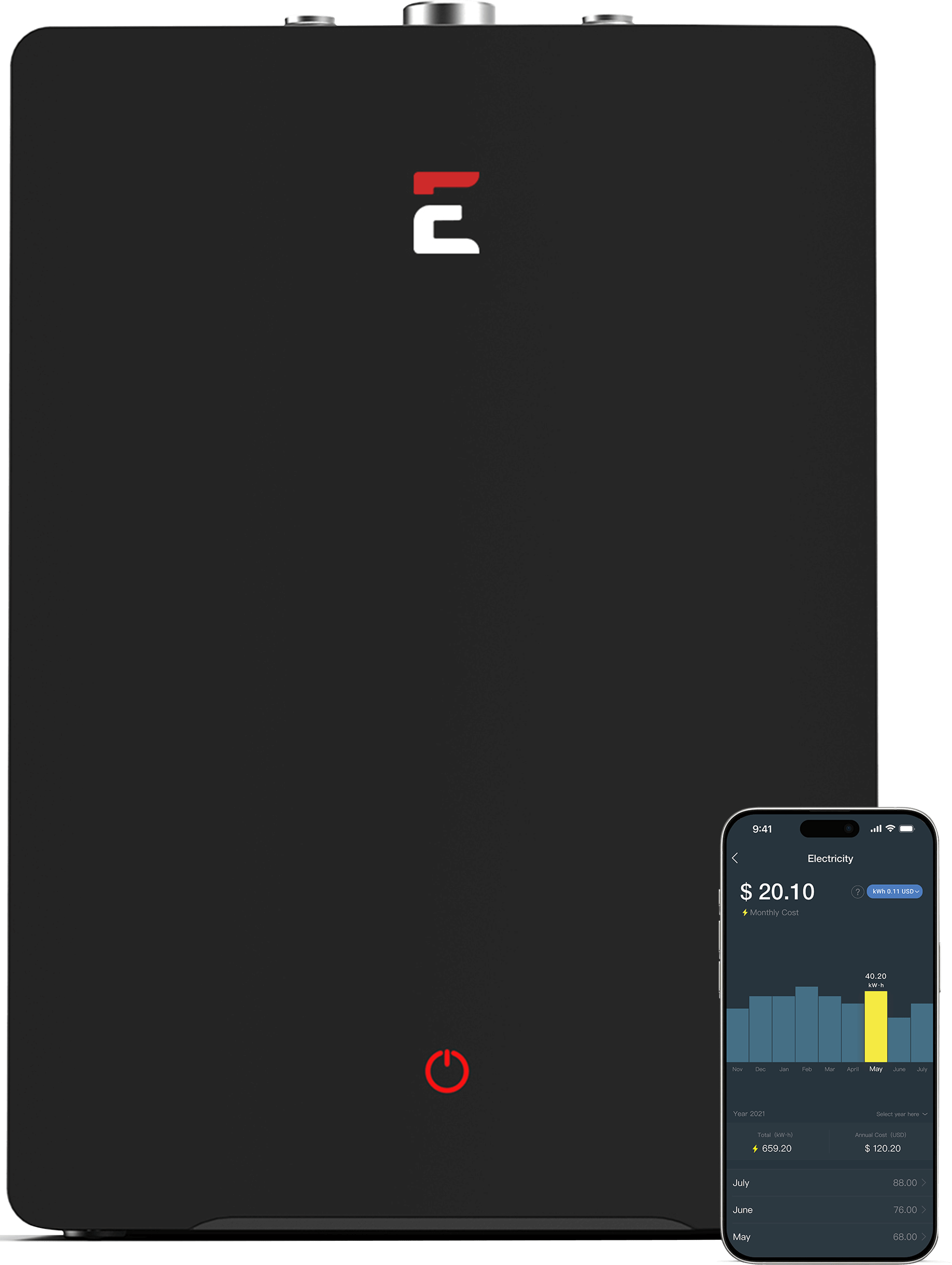
Homeowners who have confirmed their preferred fuel can compare current gas tankless water heaters or electric tankless water heaters by application and capacity.
A Five-Step Way to Choose
1. Measure Peak Hot-Water Demand
List the showers, faucets, and appliances that may use hot water at the same time. This gives you a better demand estimate than household size alone.
2. Check Incoming Water Temperature
Determine the coldest realistic incoming water temperature for your location. Subtract it from your desired outlet temperature to calculate the required temperature rise.
3. Review Existing Utilities
Confirm the available fuel, gas supply, electrical capacity, venting route, water connections, and approved installation locations with a qualified professional.
4. Compare Complete Ownership Costs
Compare equipment, installation changes, energy use, expected maintenance, warranty terms, and likely service life. Do not make the decision using purchase price alone.
5. Match the System to Your Priorities
Choose tankless for compact size, reduced standby loss, and continuous output within rated capacity. Choose storage when lower initial cost and strong short-term delivery are more important.
The Final Decision
A tankless water heater is often a good fit for homeowners who have suitable utilities, limited installation space, and a properly calculated flow requirement. It can reduce storage-related energy loss and keep supplying hot water during long usage periods without waiting for a tank to recover.
A traditional storage heater remains a sensible option for a lower-cost replacement or a home that already supports the existing system. Its stored supply can handle high short-term demand, though the tank can eventually run out.
Before choosing, compare specific models and obtain an installation assessment. The better system is the one that meets your peak demand, works with your home, and fits your ownership budget.
Frequently Asked Questions
Can I replace a traditional water heater with a tankless model?
Yes, but the conversion may require gas, venting, electrical, plumbing, or location changes. A qualified professional should assess your home and the selected model.
Does a tankless water heater provide instant hot water?
No. It heats on demand, but water must still travel through the pipes. Distance from the heater and flow rate affect the wait.
Which water heater is better for a large family?
Either can work. Compare simultaneous fixture demand, temperature rise, tank first-hour rating, and tankless GPM rather than choosing based only on family size.