 Weekly Deals
 Water Heaters
 Accessories
 Installation
 Parts
Parts
 Protection Plans
 Final Sale





Tankless Water Heater Installation Checklist
Updated August 2026 – This guide was expanded with a more complete installation checklist covering model selection, location, plumbing, gas and electrical requirements, permits, installation costs, final walkthrough checks, maintenance planning, and common installation questions.
A tankless water heater installation checklist helps you confirm that the model, utilities, location, and installation plan fit your home before work begins. It also gives you a clear way to review the completed system with the installer. This is not a DIY wiring, gas, or venting guide. Those requirements vary by model and local code, and hazardous work should be handled by qualified professionals. Use the checklist when comparing quotes, preparing the installation area, and completing the final walkthrough. In this guide, we'll cover what to confirm before scheduling, during planning, and after startup.
Key Takeaways
- Start with the installation manual and rating plate for the exact model.
- Size the heater for simultaneous hot-water demand and the required temperature rise, not gallons per minute alone.
- Have a qualified professional evaluate the location, water supply, gas or electrical capacity, venting, permits, and inspections.
- Request an itemized quote that identifies equipment, upgrades, labor, permits, removal, and commissioning.
- After installation, review startup, leak testing, controls, service access, documents, and model-specific maintenance with the installer.
How to Use This Tankless Water Heater Installation Checklist
Use the checklist at three points: before requesting a final quote, before installation begins, and during the completed-system walkthrough. Before the quote, confirm the model, application, capacity, location, utility needs, permits, and full scope of work. Before work begins, make sure the installer has the current manual and all model-approved components. After startup, confirm that required tests, inspections, control settings, and operating instructions are complete.
This checklist helps you ask better questions and document what was agreed. It does not replace the manufacturer's instructions, local codes, permit requirements, or the judgment of qualified plumbing, gas, and electrical professionals.
1. Confirm the Model, Application, and Capacity
Record the exact model number, fuel type, and approved installation location before accepting a quote. Confirm whether the unit is designed for whole-home, point-of-use, indoor, outdoor, or temporary portable use. These applications are not interchangeable.
Capacity should reflect the fixtures that may use hot water at the same time and the temperature rise between incoming and desired outlet water. Gallons per minute (GPM) by itself does not describe performance in every climate. Eccotemp's tankless water heater sizing guide explains the main sizing factors to review before choosing a model.
2. Read the Manual Before Making Installation Decisions
The manual for the exact model should guide every installation decision. It identifies approved locations, clearances, mounting requirements, water-pressure limits, utility requirements, venting, condensate handling, freeze precautions, startup procedures, and required safety components where applicable. Use its installation diagram because a generic diagram may show the wrong connections or layout. Do not transfer another model's requirements.
Download the manual before the estimate and share it with the installer. Compare it with the model number and rating plate so the fuel type, voltage, and specifications match. Eccotemp keeps its current product manuals by model in the Help Desk.
3. Check the Location, Clearances, and Service Access
Confirm that the heater is approved for the proposed indoor or outdoor location. The mounting surface must support the unit, and all model-specific clearances, combustion-air, vent-termination, weather, and freeze-protection requirements must be met. Keep combustible or flammable materials away as directed by the manual.
The location should provide safe access for filters, valves, controls, future maintenance, and repairs. Also plan for possible water leakage and drainage where the manual or local code calls for it. If you are still choosing a location, compare the practical differences in Eccotemp's guide to indoor and outdoor tankless water heaters.
4. Review the Water Supply and Plumbing Plan
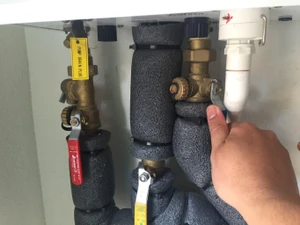
Ask the installer to confirm that the incoming water pressure and plumbing can support the exact model. Existing leaks should be identified before installation, and the inlet filter, pipe materials, connection sizes, insulation, and any approved service or isolation valves should follow the manual and local code.
Do not assume every installation needs the same pressure-relief, expansion-control, drain-pan, or condensate arrangement. Those details depend on the model, plumbing system, installation location, and local requirements. Before sign-off, confirm that water lines were purged as required, connections were checked for leaks, the inlet filter is accessible, and maintenance points are not blocked.
5. Review Gas or Electrical Requirements
Gas and electric tankless water heaters place different demands on a home. The installer should evaluate the complete utility system rather than judging capacity from the connection beside the old heater. Ask for any required upgrades to be identified in writing before work starts.
Gas Models
Confirm that the fuel type matches the rating plate. A qualified professional should evaluate gas-service capacity, line sizing, pressure, shutoff components, combustion air, venting, and condensate disposal when applicable. The evaluation should account for other gas appliances. Required pressure and leak tests, startup adjustments, and inspections should be completed by the appropriate professional under the manual and local code.
Electric Models
Have a qualified electrician compare the model's voltage, amperage, breaker, circuit, wire, grounding, and protection requirements with the home's electrical service and panel capacity. Some installations may need dedicated circuits or a service upgrade, while others may not. The answer must come from the exact manual and a site evaluation, not assumptions based on another electric tankless heater.
6. Ask About Permits, Inspections, and Installation Cost
Permit and inspection requirements depend on your jurisdiction and the work involved. Ask who will obtain approvals, schedule inspections, and provide final documentation. Plumbing, gas, electrical, venting, or building permits may apply when existing systems are changed.
Tankless water heater installation cost also depends on the site. Request an itemized estimate covering the heater, approved accessories, labor, old-unit removal, plumbing changes, gas or electrical upgrades, venting, condensate or drainage work, permits, and startup. Ask the installer to separate required work from optional upgrades. A clear scope makes quotes easier to compare and reduces surprises after work begins.
7. Complete a Post-Installation Walkthrough
Do not end the project when the heater is mounted. Ask the installer to walk through the completed system after commissioning. Confirm that the heater starts and operates according to the manual, delivers hot water at the intended fixtures, and shows no active error code. Review the temperature setting and controls without changing protected installer settings.
The installer should confirm completion of required water, gas, venting, combustion, electrical, and leak checks as applicable. Verify that shutoffs and service points remain accessible, discharge or condensate lines are routed as approved, permits are closed, and the installation area is clean and protected from foreseeable water damage.
8. Plan Maintenance Before the Installer Leaves
Ask for the maintenance schedule and procedure for the exact model. Water quality, usage, installation conditions, and manufacturer instructions can affect filter cleaning, inspection, and descaling needs, so a fixed interval should not be applied to every tankless water heater.
Confirm how to access the inlet filter and service valves, who should perform each task, and what steps apply before freezing weather. Keep the installer or service contact with the manual. If the model's instructions call for descaling, review the approved procedure and suitable equipment before service. Eccotemp's tankless water heater descaling kits are available for owners whose model and maintenance procedure require them.
Keep the Manual and Installation Records Together
Create one file for the model and serial numbers, current manual, purchase receipt, installer details, itemized quote, permits, inspection records, and startup information. Add photos of the completed installation and note where shutoffs and service points are located. These records make future maintenance and support conversations easier.
If you need model-specific instructions, use Eccotemp's official product-manual library or contact the Eccotemp Help Desk with the full model and serial numbers. Confirm the manual before buying installation accessories or applying requirements from a different tankless water heater.
Frequently Asked Questions
Do tankless water heaters require a larger gas line or electrical service?
Sometimes. The installer must compare the exact model's demand with your existing gas supply, electrical panel, circuits, wiring, and other connected appliances before installation work begins.
Do you need a permit to install a tankless water heater?
Permit and inspection requirements depend on your location and the work involved. Ask the installer or local building department what approvals are required before work begins.
Can an outdoor or portable tankless water heater be installed indoors?
No. Use only a model specifically approved for indoor installation. Eccotemp portable tankless water heaters are for temporary outdoor use and must not be installed indoors or permanently.