 Weekly Deals
 Water Heaters
 Accessories
 Installation
 Parts
Parts
 Protection Plans
 Final Sale




Indoor vs. Outdoor Tankless Water Heaters: Which Is Right for Your Home?
Updated August 2026 – This guide was refreshed with clearer advice on indoor vs. outdoor placement, venting, weather exposure, freeze protection, service access, and choosing the right setup for your home.
Choosing between an indoor and outdoor tankless water heater starts with more than finding an open wall. Indoor gas models require approved venting and combustion-air planning. Outdoor models save indoor space and simplify exhaust routing, but they face freezing temperatures, wind, rain, salt air, and other environmental conditions.
The right choice depends on your climate, home layout, fuel supply, service access, and the installation requirements for the exact model. In this guide, we’ll compare both options and explain what to review with a qualified installer.
Key Takeaways
- Install a water heater only in a location approved for that exact model.
- Indoor gas models require model-approved combustion air and exhaust venting.
- Outdoor models save indoor space but face greater weather and freeze exposure.
- Built-in freeze protection does not make an outdoor unit freeze-proof.
- An outdoor enclosure must not block airflow, exhaust, drainage, clearances, or servicing.
- Climate, layout, utility connections, and installation requirements should guide the final choice.
Indoor vs. Outdoor Tankless Water Heaters at a Glance
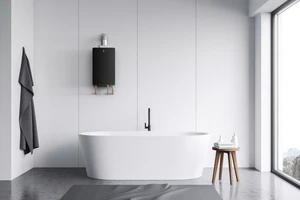
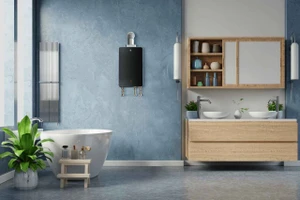
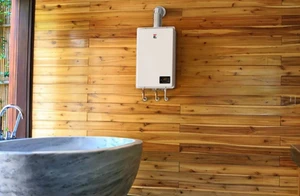
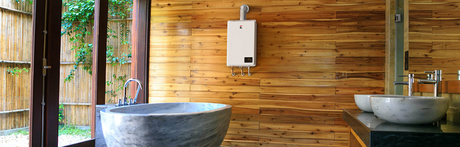
An indoor tankless water heater is designed for installation within an approved interior location, such as a utility room, basement, garage, or mechanical space. An outdoor model is built for installation on an exterior wall in locations allowed by its manual.
Neither option is automatically better. Indoor installation offers more protection from outdoor conditions but may require a more involved venting route. Outdoor installation frees interior space and can simplify exhaust planning, but the heater and connected plumbing need suitable protection from local weather.
|
Decision Factor |
Indoor Tankless Water Heater |
Outdoor Tankless Water Heater |
|
Installation location |
Approved interior space |
Approved exterior wall |
|
Gas-model venting |
Requires an approved exhaust system |
Typically exhausts directly outdoors without an indoor vent run |
|
Weather exposure |
Protected from direct rain, sun, and wind |
Exposed to local weather and environmental conditions |
|
Freeze risk |
Lower in conditioned space, but still possible |
Greater concern in freezing climates |
|
Interior space |
Uses some indoor wall and service space |
Preserves indoor space |
|
Service access |
Protected location may simplify servicing |
Technician must work outdoors |
|
Best fit |
Homes with a suitable vent route and mechanical space |
Homes with limited interior space and a suitable climate or winterization plan |
When an Indoor Tankless Water Heater Makes Sense
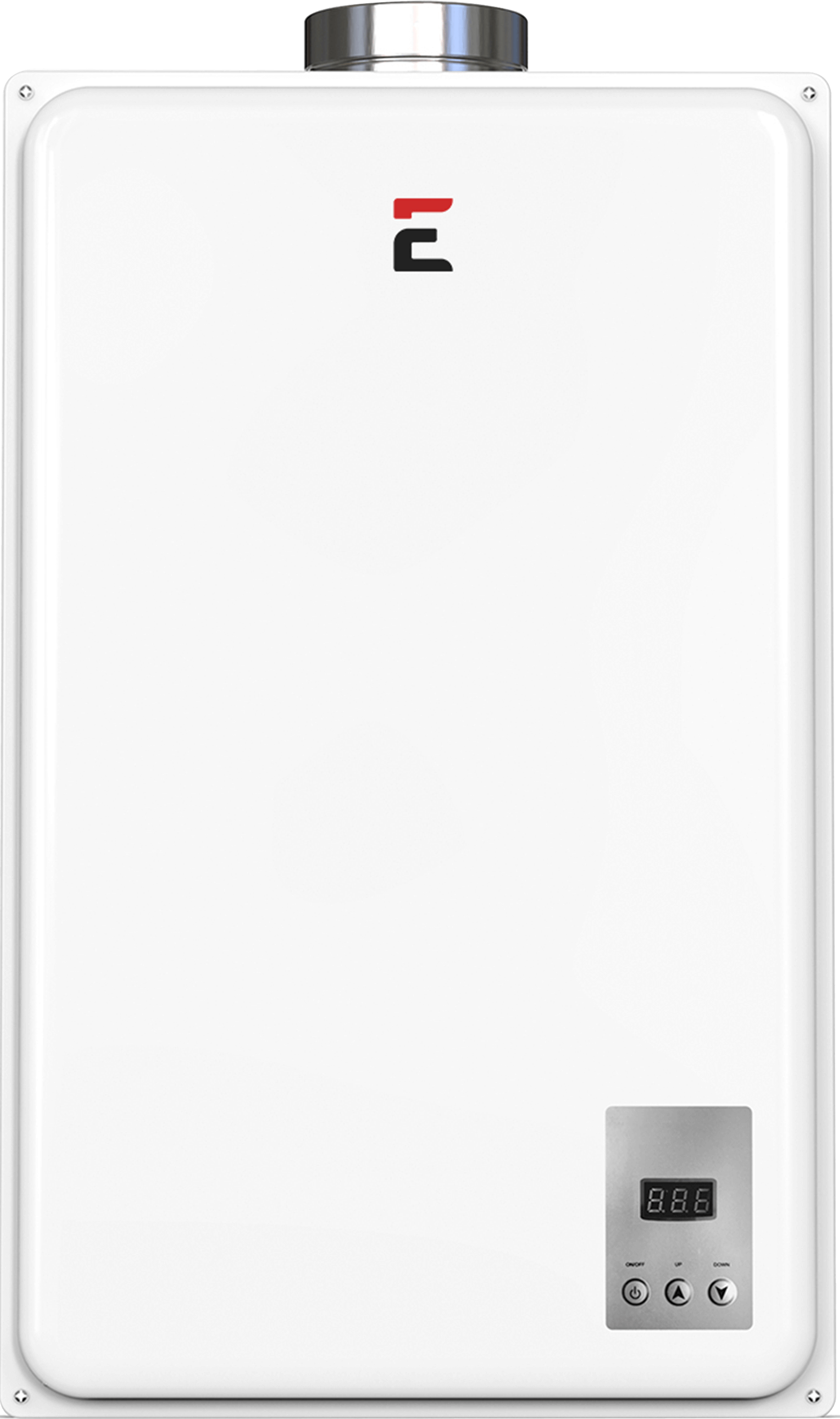
An indoor model can be a strong choice when the home has a suitable mechanical area and a practical route for approved venting. Keeping the heater inside protects its cabinet, controls, and connections from direct rain, sunlight, wind, airborne debris, and coastal exposure.
Indoor installation may suit new construction because venting, drainage, fuel supply, electrical service, and water lines can be planned before walls and finishes are completed. It can work in an existing home too, provided the proposed location meets the model’s requirements.
Indoor Installation Advantages
Indoor tankless water heaters provide greater protection from outdoor conditions. A conditioned or adequately protected space can reduce direct freeze exposure and make maintenance more comfortable during poor weather.
Placement inside the home may allow the heater to sit closer to frequently used fixtures. Shorter hot-water piping can reduce the distance heated water must travel, though pipe layout and system design still affect delivery time.
Indoor Installation Requirements
Indoor natural gas and propane models need an approved way to receive combustion air and discharge exhaust outdoors. Vent material, pipe diameter, maximum length, elbow limits, termination position, and clearances vary by model.
Some condensing models require condensate drainage. The proposed area must provide the specified clearances and enough access for filters, valves, controls, inspection, maintenance, and repairs. Never assume a small cabinet or closet is suitable simply because the heater fits inside it.
Indoor Installation Limitations
Retrofitting an indoor gas unit can require wall or roof penetrations, vent components, drainage work, and changes to gas or water lines. These requirements may make some indoor locations impractical.
Indoor placement does not eliminate every freeze risk. Water lines or parts of the vent system can still encounter cold conditions in garages, crawlspaces, attics, exterior-wall cavities, or unconditioned rooms. Follow the model’s freeze precautions rather than relying on the word “indoor.”
When an Outdoor Tankless Water Heater Makes Sense
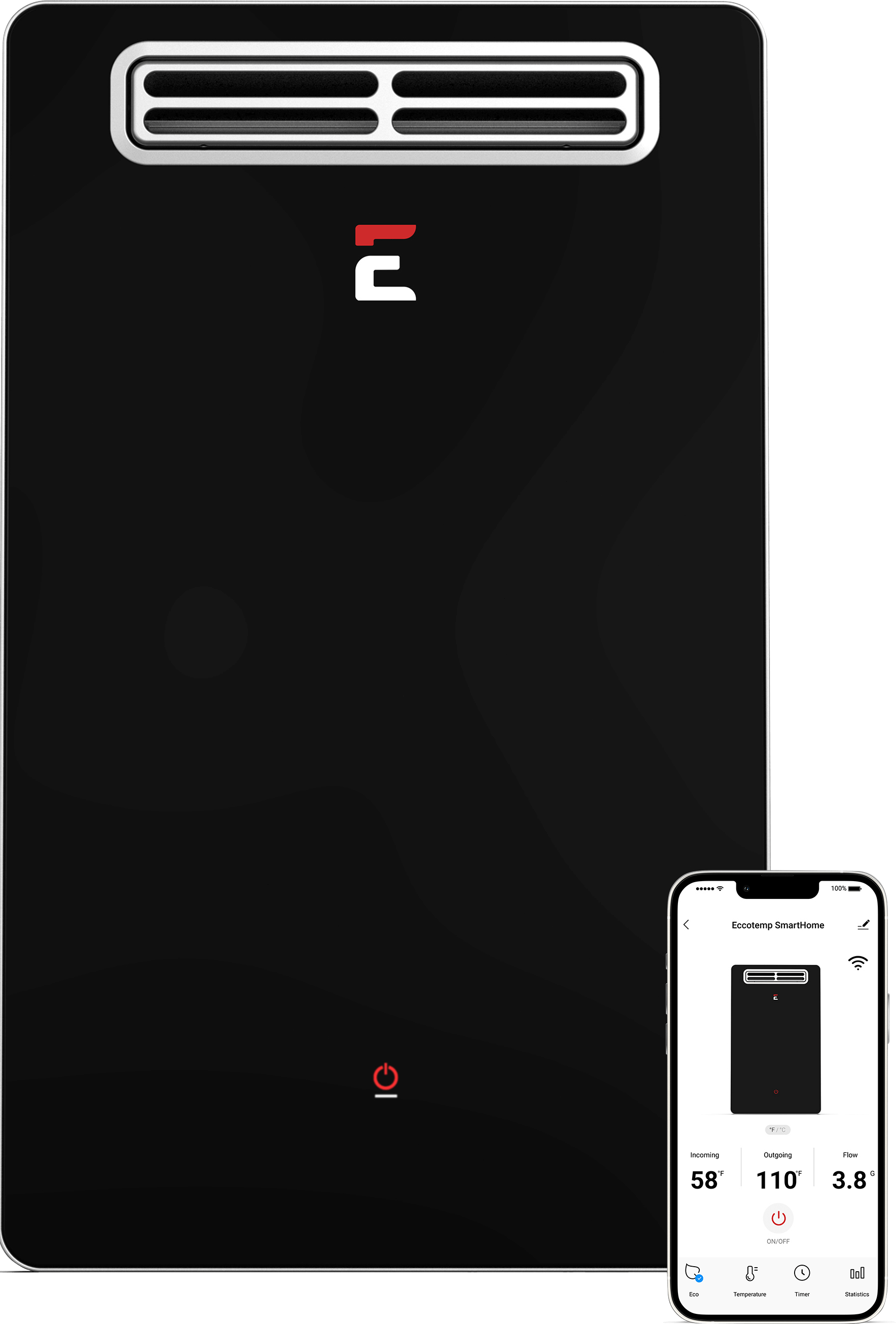
An outdoor model can be useful when interior space is limited or routing an indoor gas vent would be difficult. Since the heater is already outside, an outdoor gas model typically discharges combustion products directly into open air rather than through an indoor vent run.
This does not mean it can be placed anywhere on an exterior wall. The manual may specify distances from doors, windows, air intakes, meters, corners, grade, walkways, and other building features. The location must remain accessible for installation and service.
Outdoor Installation Advantages
Outdoor placement preserves utility-room, basement, garage, or closet space. It may reduce the amount of interior construction needed in an existing home, especially where a suitable vent route is unavailable.
The heater can sometimes be positioned near the fixtures with the highest hot-water demand. That may shorten the hot-water pipe route, but final placement must still satisfy exhaust, clearance, utility, drainage, and service requirements.
Weather and Environmental Exposure
Outdoor-rated units are built for exterior installation, but they are not immune to environmental damage. Freezing temperatures, strong wind, wind-driven rain, direct sun, snow, airborne debris, and salt air can affect the heater or exposed connections.
The installer should assess the specific wall and local climate. A protected exterior location may be preferable, provided that the protection does not interfere with airflow, exhaust discharge, drainage, required clearances, or maintenance access.
Freeze Protection and Winter Planning
Some outdoor models include powered freeze-protection features. These features depend on the conditions stated in the product manual and may require uninterrupted electrical power. They should not be treated as a guarantee against freeze damage.
Exposed pipes, valves, and fittings can freeze even when the heater has internal protection. In freezing climates or during a power outage, additional precautions may be required. Follow the exact manual’s draining, insulation, power, and winterization instructions.
Can You Put an Outdoor Tankless Water Heater in an Enclosure?
Do not place an outdoor tankless water heater inside a cabinet, box, or enclosure unless the manufacturer’s documentation for that model permits the arrangement. A poorly designed enclosure can trap exhaust, restrict combustion air, block drainage, reduce service space, or create unsafe clearances.
An enclosure also does not turn an outdoor model into an indoor model. The location must remain an approved outdoor installation area.
If local weather makes protection necessary, ask a qualified installer to compare the proposed design with the manual and local code. Any approved cover or structure must preserve required airflow, exhaust paths, clearances, drainage, and access.
Six Factors to Check Before Choosing
1. Model Rating
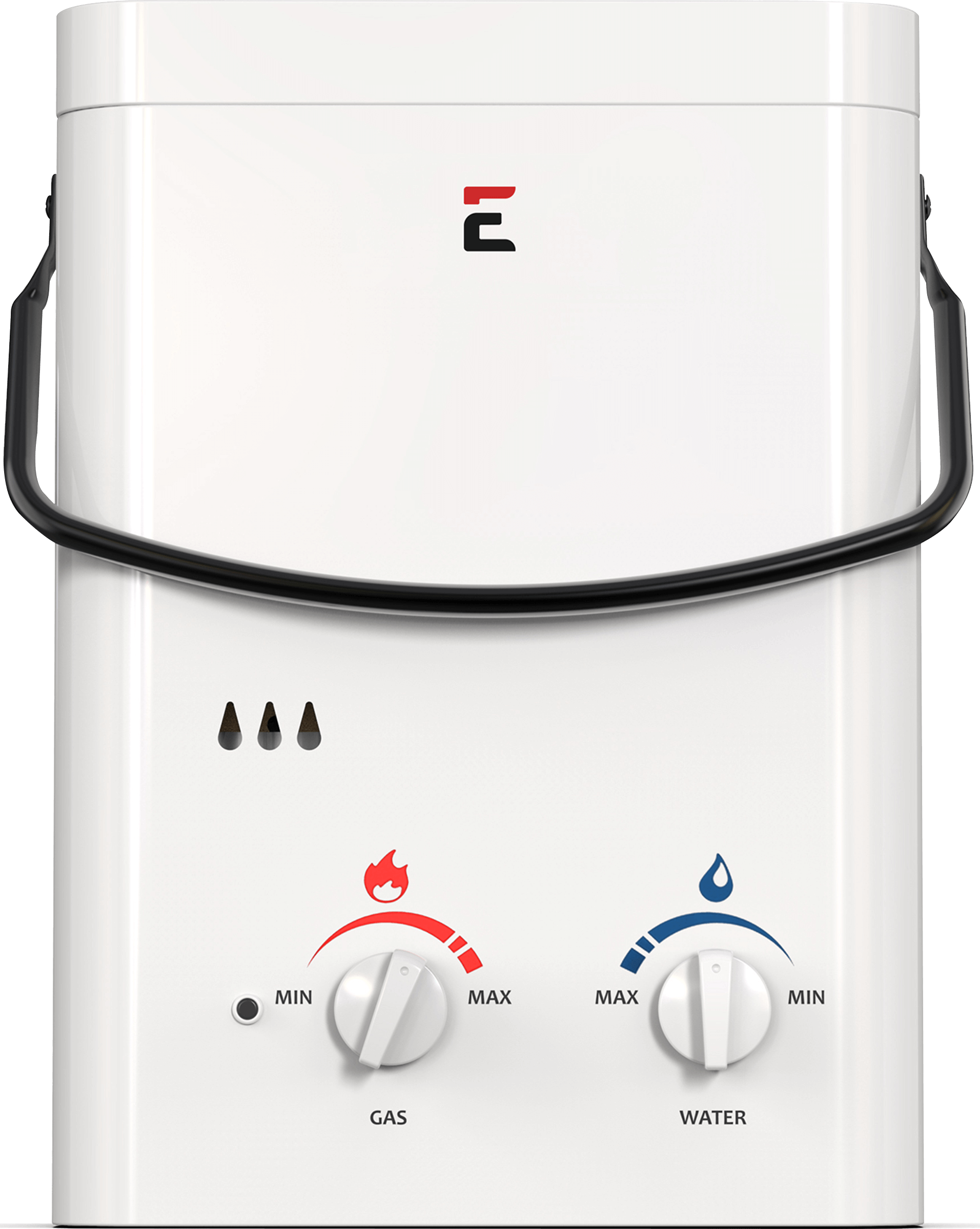
Start with the exact product documentation. Use an indoor model indoors and an outdoor model only in an approved exterior location. Portable outdoor water heaters are a separate product type and must not be installed indoors or used as permanent whole-home installations.
2. Local Climate
Review freezing temperatures, snow, wind, heavy rain, direct sun, humidity, flooding potential, and coastal salt exposure. Outdoor placement requires more environmental planning. Indoor placement may offer better protection, but unconditioned interior areas can still become cold enough to create freeze concerns.
3. Venting and Combustion Air
For indoor gas models, the installer must plan the approved vent system and combustion-air arrangement. Outdoor models simplify this part of the installation, but their exhaust outlet must still maintain all required distances from building openings and nearby features.
4. Utility Connections
Compare the proposed location with the available water lines, fuel supply, electrical service, drainage, and any condensate requirements. Long or complicated utility routes can increase installation work. The installer must confirm that existing gas or electrical capacity meets the exact model’s requirements.
5. Hot-Water Demand and Pipe Layout
Indoor versus outdoor placement does not determine heater capacity. Size the unit using simultaneous hot-water demand, flow rate in gallons per minute (GPM), incoming water temperature, and required temperature rise.
Pipe distance matters too. A heater located far from the main fixtures can increase the wait for hot water even when the model has enough heating capacity.
6. Maintenance and Service Access
Leave the clearances required by the manual. Filters, shutoff valves, controls, service connections, and removable panels must remain accessible.
An outdoor location behind landscaping, fencing, or a tightly built enclosure can make maintenance difficult. An indoor unit placed in a cramped cabinet can create the same problem.
Which Option Is Better for Your Home?
Choose an indoor tankless water heater when you have a compliant interior location, a practical vent route, suitable drainage where required, and enough service space. It is often the stronger option when protection from severe outdoor conditions is a priority.
Choose an outdoor model when indoor space is limited, exterior placement is allowed, and your climate and site can support the necessary weather and freeze precautions. Outdoor placement may be especially practical in an existing home where indoor vent routing would require major changes.
Before buying, compare current Eccotemp gas tankless water heaters by indoor or outdoor configuration, fuel type, and capacity. Then have a qualified professional confirm the location, utilities, clearances, permits, and model-specific requirements.
For deeper planning, use Eccotemp’s tankless water heater installation checklist and review how to choose the best installation location. Keep the current manual available throughout planning, installation, and future service.
Frequently Asked Questions
Can an indoor tankless water heater be installed outside?
No. Install it only in locations approved by its manual. An indoor model lacks the outdoor rating and environmental protection required for permanent exterior exposure.
Do outdoor tankless water heaters freeze?
They can. Built-in freeze protection has operating limits and may depend on electrical power. Exposed plumbing can still freeze, so follow the model’s winterization instructions.
Does an outdoor tankless water heater need an enclosure?
Usually not. Add an enclosure only if the model documentation permits it and the design preserves required airflow, exhaust discharge, drainage, clearances, and service access.