 Weekly Deals
 Water Heaters
 Accessories
 Installation
 Parts
Parts
 Protection Plans
 Final Sale




Smart Water Heaters: What They Are and How They Work
Updated August 2026 – This guide was refreshed with clearer explanations of smart water heater features, energy use, Wi-Fi controls, alerts, security, and how to choose the right connected system.
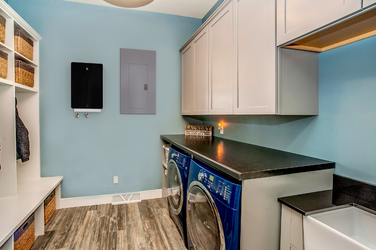
A smart water heater is a connected water heater that lets you monitor or control selected functions through an app, smart-home platform, or digital control panel. Depending on the model, you may be able to adjust the temperature, create schedules, track energy use, receive maintenance alerts, or use voice commands.
However, “smart” describes the controls, not the heating method. A smart water heater may be tankless, storage-based, electric, gas, propane, or heat-pump-powered. This guide explains how these systems work, which features matter, and when the connected controls provide practical value.
Key Takeaways
- Smart controls and the underlying water-heating technology are separate considerations.
- Available features vary by model and may include scheduling, remote control, usage data, alerts, and voice integration.
- A smart connection does not automatically make a water heater more efficient or extend its lifespan.
- Energy savings depend on the heater type, efficiency rating, household habits, climate, fuel rates, and how the controls are used.
- Capacity, fuel availability, installation requirements, and temperature rise still matter more than app features when sizing a water heater.
What Is a Smart Water Heater?
A smart water heater combines a conventional water-heating system with connected controls, sensors, and software. It may connect to a home network through Wi-Fi or communicate with a nearby device through Bluetooth. The owner then uses a compatible app or smart-home platform to access available controls.
The exact meaning of “smart” varies by manufacturer and model. One water heater may offer simple remote temperature adjustment, while another provides scheduling, operating modes, estimated consumption data, maintenance notifications, and voice commands. A connected water heater should therefore be evaluated in two parts:
- The water heater itself: Its fuel, capacity, efficiency, flow rate, installation location, and ability to meet hot-water demand.
- Its smart controls: The functions available through the app, control panel, voice assistant, or connected-home system.
How Do Smart Water Heaters Work?
The basic heating process depends on the type of water heater. A tankless model activates when it detects water flowing through the unit. A storage model maintains heated water inside a tank. A heat pump water heater transfers heat from the surrounding air into stored water. The connected layer works alongside that heating system:
- Sensors collect information. Depending on the model, sensors may monitor temperature, water flow, operating status, energy consumption, or system errors.
- The control board processes commands. It applies local settings and instructions received through an app or connected control.
- The network connection shares information. The system sends available operating data and notifications to the app.
- The user adjusts supported settings. Available controls may include temperature, schedules, timers, operating modes, or on/off commands.
- Alerts identify conditions requiring attention. Some systems report error codes, maintenance reminders, connection problems, or possible leaks.
Not every smart water heater learns household behavior or adjusts itself automatically. Some models provide direct remote controls without predictive or adaptive functions. Check the product documentation instead of assuming every system includes the same technology.
Smart Controls Can Be Added to Different Water Heater Types
“Smart water heater” is not a separate fuel type or heating category. Connected controls can appear on several kinds of equipment.
Smart Tankless Water Heaters
A tankless water heater heats water as it flows through the unit instead of maintaining a large stored supply. Smart controls may add remote temperature adjustment, timers, routines, error notifications, or usage information.
Actual capacity still depends on flow rate and temperature rise. Gallons per minute (GPM) alone does not show how much hot water a model can provide in every climate. For a closer look at the heating process, see how tankless water heaters work.
Smart Storage and Mini-Tank Water Heaters
Storage heaters maintain a limited quantity of heated water. Compact mini-tank models are often installed near a sink or another point of use to reduce the wait for hot water.
Connected controls may let the owner change temperatures, set timers, receive alerts, or turn the unit off while a property is unoccupied. Tank capacity and recovery rate remain important because the stored supply can be depleted.
Smart Heat Pump Water Heaters
A heat pump water heater transfers heat from the surrounding air into water stored in its tank. Many connected models allow users to switch operating modes, monitor consumption, or activate vacation settings.
According to the U.S. Department of Energy, smart controls on heat pump water heaters can provide additional savings when users apply operating modes correctly. Their efficiency primarily comes from the heat-pump technology, however, rather than connectivity alone.
Gas, Propane, and Electric Models
Smart functionality may be available with natural gas, liquid propane, or electric water heaters. Fuel choice affects installation requirements, operating costs, heating performance, and available equipment. Choose the correct fuel and water-heating technology first. Treat connectivity as an additional feature rather than the main sizing or installation criterion.
Common Smart Water Heater Features
Features vary considerably, so verify them on the exact model and in its current documentation.
Remote Temperature and Power Controls
A compatible app may allow users to view or change the temperature and access supported power or operating controls. This can be useful when a water heater is installed outside, under a counter, or in another inconvenient location. Temperature changes should remain within the manufacturer’s permitted range. Adjusting the app does not override safety controls, installation requirements, or local plumbing codes.
Schedules, Timers, and Vacation Modes
Schedules can reduce unnecessary operation during predictable periods when hot water is not needed. Vacation mode may be useful for a second home, rental property, or household that will be vacant for an extended period. The benefit depends on the system. Scheduling may affect a storage heater differently from a tankless model that already heats water only during demand.
Usage and Energy Information
Some apps display estimated water-heating activity, fuel or electricity use, costs, or operating history. This information can help identify patterns, but it should not automatically be treated as utility-grade billing data. Before comparing estimates with a bill, check what the app measures, which rates it uses, and whether those rates have been entered correctly.
Maintenance and Error Notifications
A connected water heater may report error codes, service reminders, or unusual operating conditions. These alerts can help the owner notice a problem sooner, but they do not diagnose every possible fault. Use the applicable manual or official support documentation to interpret an error. Gas, electrical, combustion, venting, or internal repair work should be handled by a qualified professional.
Leak Detection
Leak features are not universal. Some water heaters include a sensor, while others require a separate accessory. A notification-only system is also different from one connected to an automatic shutoff valve. When leak protection is important, verify exactly what the model detects, where the sensor must be placed, and whether the system only sends an alert or can also stop the water supply.
Voice and Smart-Home Integration
Some smart water heaters connect with platforms such as Amazon Alexa or Google Home. Depending on the model, voice commands may adjust the temperature, change operating modes, or turn the unit on and off. Available commands can vary by water heater, app version, region, and smart-home platform. Before purchasing, confirm current compatibility, supported commands, account requirements, and whether core controls remain available during an internet outage.
Smart Water Heater Benefits and Limitations
The best reason to choose smart controls is usually improved visibility and convenience, not the assumption that connectivity will solve every water-heating problem.
Potential Benefits
- Remote access: View or adjust supported settings without reaching the physical control panel.
- Better scheduling: Reduce unnecessary operation during planned periods of low demand.
- Useful notifications: Receive supported maintenance, error, network, or leak alerts.
- Clearer usage patterns: Review available consumption information and adjust household habits.
- Property management: Check supported functions at a second home, rental property, or occasionally occupied building.
- Accessible controls: Use an app or voice assistant when the water heater’s physical controls are difficult to reach.
Potential Limitations
- Higher purchase cost: Connected equipment may cost more than a comparable model without smart controls.
- Network requirements: Remote functions usually need a reliable home network and internet connection.
- App dependency: Some features depend on continued app support, compatible mobile operating systems, or third-party platforms.
- Feature differences: Terms such as “smart,” “monitoring,” and “leak protection” do not describe the same capabilities on every model.
- Privacy and security: Connected devices add another account and network connection that must be managed.
- No sizing correction: An app cannot make an undersized water heater meet excessive simultaneous demand.
Do Smart Water Heaters Save Energy?
They can help manage energy use, but connectivity alone does not guarantee lower bills. A smart control may reduce unnecessary heating through schedules, vacation settings, temperature management, or better visibility into usage. The result depends on whether those functions change how the system operates.
The underlying heater type and efficiency remain major factors. For example, a heat pump water heater gains most of its efficiency by moving heat rather than producing it directly. A tankless heater avoids maintaining a large stored supply, whether or not it has Wi-Fi. Savings also vary with:
- Household hot-water consumption
- Fuel and electricity rates
- Incoming water temperature
- Desired outlet temperature
- Equipment efficiency
- Storage and distribution losses
- Existing operating habits
- Time-of-use utility rates
- How schedules and operating modes are configured.
Does Smart Technology Make a Water Heater Last Longer?
There is no reliable basis for assuming that a water heater will last longer simply because it is connected. Service life depends more directly on the heater type, water quality, installation quality, maintenance, operating conditions, component design, and manufacturer requirements.
Maintenance and error notifications may help an owner respond to certain conditions sooner. However, an alert does not prevent mineral buildup, corrosion, improper installation, unsuitable operating conditions, or normal component wear.
What Happens If the Wi-Fi Goes Down?
A connected water heater should not be assumed to stop heating water merely because internet service is unavailable. In many systems, the water heater continues using its local controls and stored settings while remote app access becomes temporarily unavailable.
The exact behavior is model-specific. Some schedules or automations may run locally, while others may depend on a cloud service or third-party smart-home platform. Confirm the following before buying:
- Whether normal heating continues without internet access
- Which functions remain available on the physical control panel
- Whether schedules are stored locally
- How the device reconnects after an outage
- What happens if the app or connected service is discontinued
Smart Water Heater Privacy and Security
Because a smart water heater connects to your home network, it requires the same basic security precautions as other connected appliances.
Create a strong, unique account password, replace default login details, keep the app and device software updated, and protect your home Wi-Fi network. Enable multifactor authentication when available. Before turning on usage monitoring, review what data the app collects, how long it stores that information, and whether it shares data with other services.
How to Choose the Right Smart Water Heater
Start with hot-water performance and installation compatibility. Smart functions should come later in the decision. Check these things before buying:
- Choose the heater type. Decide whether a tankless, storage, mini-tank, or heat pump system fits the application.
- Confirm the fuel or electrical supply. Check existing natural gas, propane, voltage, amperage, wiring, and service capacity as applicable.
- Calculate demand. For tankless equipment, consider simultaneous flow and required temperature rise. For storage equipment, consider tank capacity, recovery rate, and first-hour delivery.
- Review installation conditions. Check indoor or outdoor approval, venting, drainage, clearances, water pressure, and local code requirements.
- Compare efficiency. Review UEF, estimated annual energy use, fuel prices, and applicable utility rates.
- Verify each smart feature. Confirm app controls, scheduling, alerts, usage data, leak capabilities, voice compatibility, and offline behavior.
- Check ongoing support. Review warranty coverage, app availability, software requirements, replacement parts, and official technical support.
Eccotemp Smart Water Heater Options
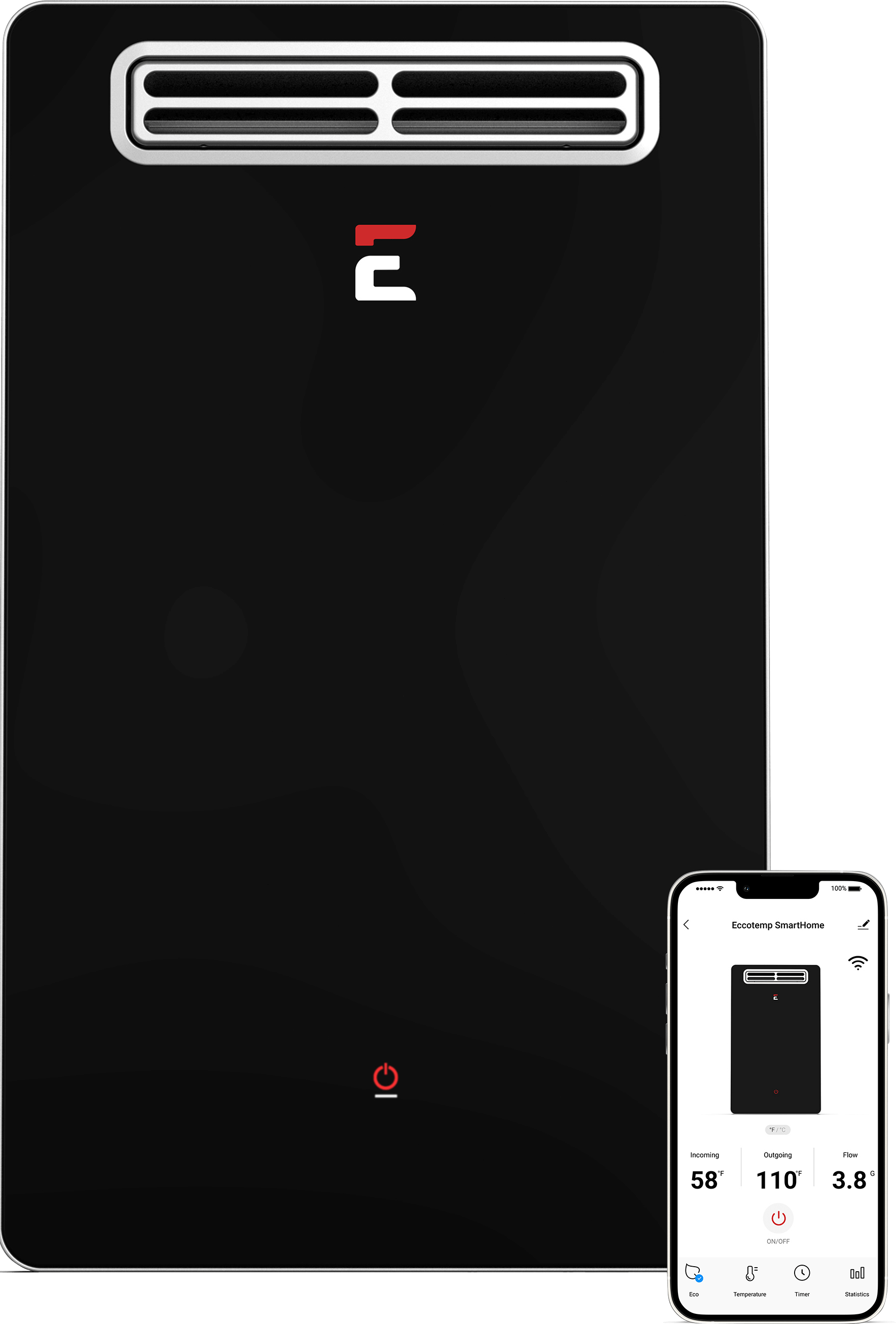
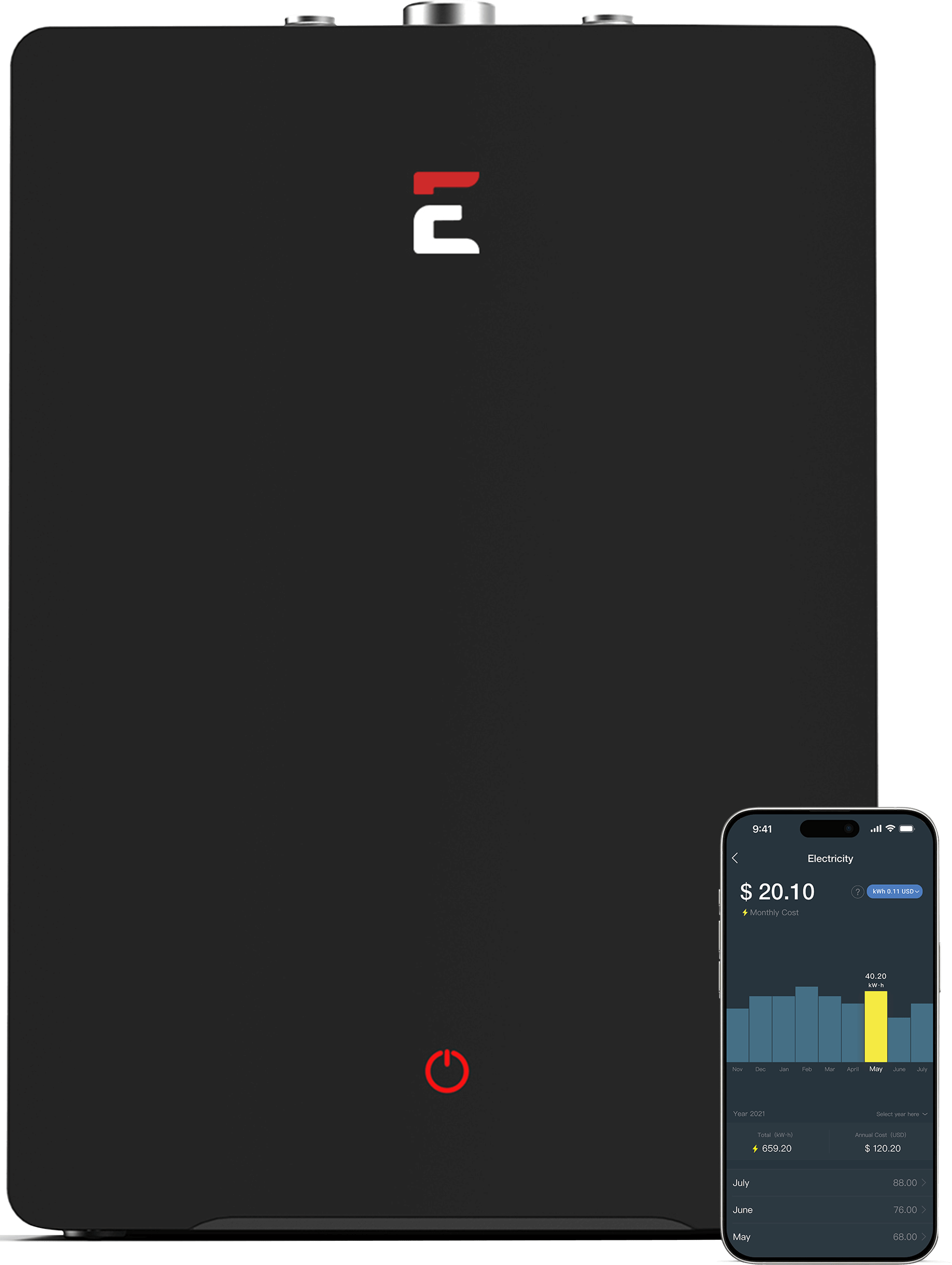
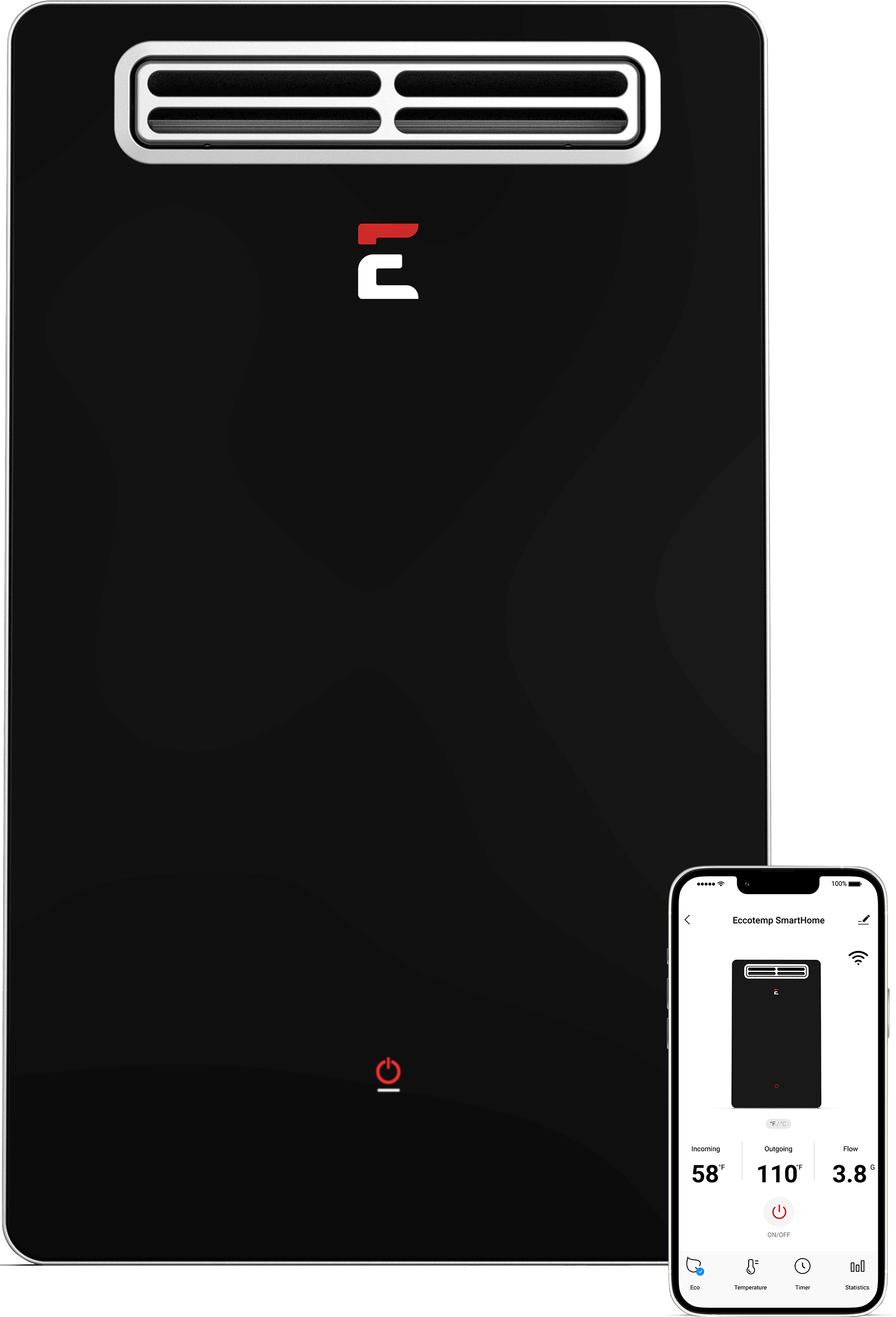
Eccotemp’s current SMARTHOME water heater range includes connected gas tankless, electric tankless, and electric mini-tank options. Available functions vary, but supported models may provide app-based temperature adjustment, schedules, timers, consumption information, notifications, and voice commands.
For example:
- The SH22 Series provides whole-home natural gas or liquid propane tankless options with app and supported voice controls.
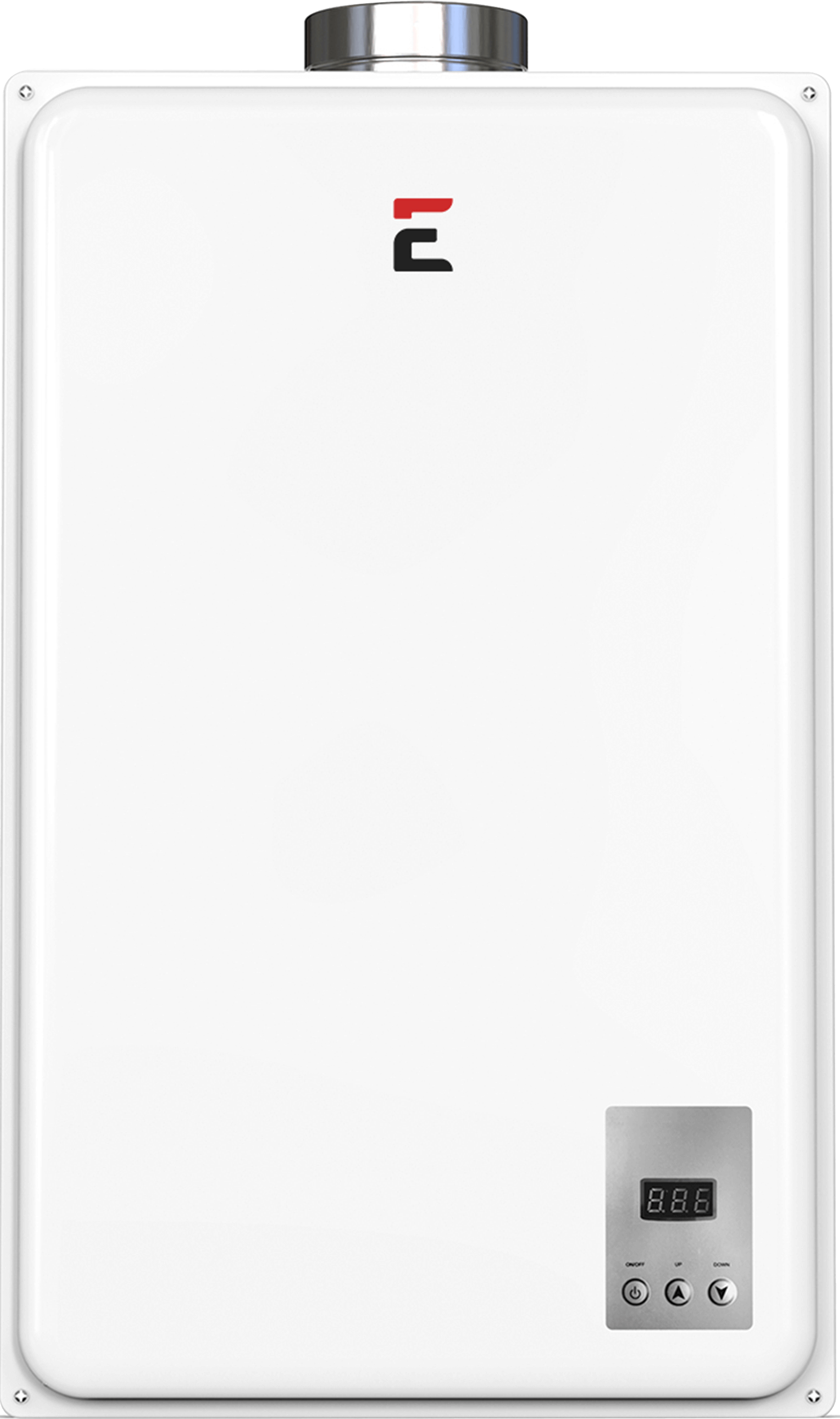
- The SH12-A Series provides a lower-flow natural gas tankless option for applications with more moderate demand.
- The SHiE-27 is an adjustable electric tankless model with connected controls.
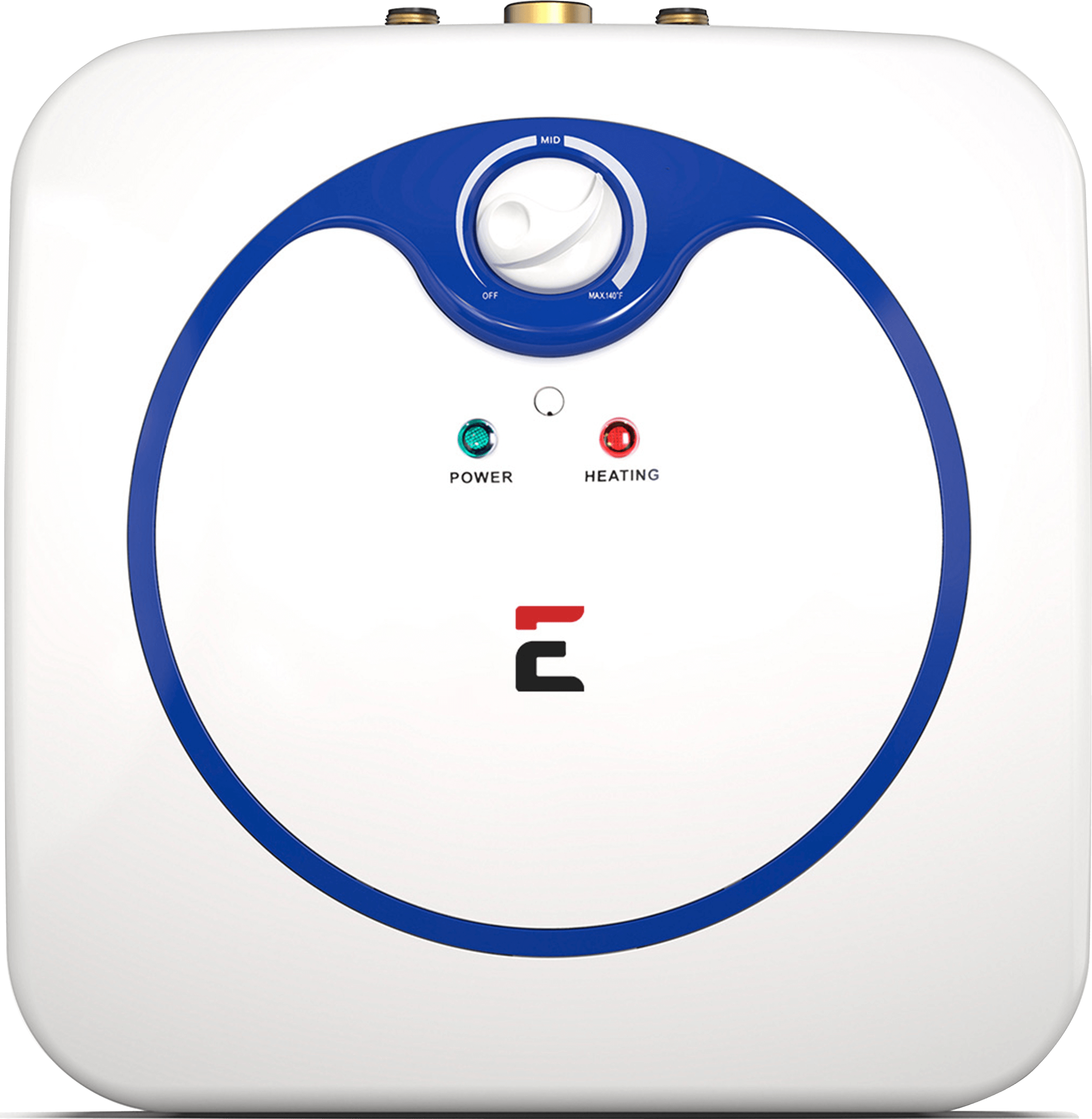
- The ESH 2.5-gallon mini-tank provides point-of-use storage with smart controls and supported voice commands.
Do not choose between these models from the headline GPM or smart features alone. Actual tankless performance changes with required temperature rise, and installation requirements vary by fuel, location, and model.
Is a Smart Water Heater Worth It?
A smart water heater can be worthwhile if you will use its connected functions. Remote controls, schedules, error notifications, and operating data are especially useful for second homes, rentals, irregular schedules, difficult-to-reach installations, or households actively monitoring energy use.
The added cost may provide less value if you only need a dependable local temperature control and would rarely open the app. Compare the connected model with a similarly sized non-connected option. Prioritize suitable capacity, efficiency, installation, warranty support, and expected operating cost before deciding how much the smart features are worth.
Frequently Asked Questions
Does a smart water heater have to be tankless?
No. Smart controls are available on tankless, storage, mini-tank, and heat pump water heaters. “Smart” describes connectivity and controls, not how the water is heated.
Can a smart water heater work without Wi-Fi?
Most water heaters retain basic local operation during an internet outage, but remote controls may stop working. Offline behavior and locally stored schedules vary by model.
Can I install a smart water heater myself?
The heater should be installed according to its manual and local codes. Gas, venting, hardwired electrical, or service-upgrade work generally requires appropriately qualified professionals.