 Weekly Deals
 Water Heaters
 Accessories
 Installation
 Parts
Parts
 Protection Plans
 Final Sale




How Long Do Tankless Water Heaters Last?
Tankless water heaters can last around 20 years when they are correctly installed, used within their designed capacity, and maintained according to the manufacturer’s instructions. The exact lifespan depends on the model, water quality, usage, installation, and maintenance history. Hard-water scale, restricted airflow, neglected filters, and unresolved error codes can shorten the unit’s service life. In this guide, we’ll explain how long tankless water heaters last, what affects their lifespan, and how to decide between repair and replacement.
Key Takeaways
- A whole-home tankless water heater can have a life expectancy of about 20 years.
- Actual service life varies by model, installation, water quality, usage, and maintenance.
- Mineral scale can restrict water flow and reduce heat-transfer performance.
- Recurring error codes, leaks, unstable temperatures, and rising repair costs may signal an aging unit.
- Maintenance must follow the instructions for your specific model.
- Age alone does not mean a working tankless water heater must be replaced.
What Is the Average Tankless Water Heater Lifespan?
A well-maintained tankless water heater may provide reliable service for approximately 15 to 20 years. ENERGY STAR states that whole-home gas tankless water heaters have a life expectancy of 20 years, which is longer than conventional tank-type water heaters.
That figure is a useful planning estimate rather than a guaranteed replacement date. A unit may need repair or replacement sooner if it has heavy scale buildup, an incorrect installation, unusually demanding usage, or repeated component problems. Another system may continue operating beyond 20 years if its parts remain serviceable and it receives suitable care.
The model’s warranty should not be treated as its predicted lifespan. Warranty periods identify what the manufacturer may cover and for how long. They do not promise that every component will operate for that entire period.
Why Can Tankless Water Heaters Last So Long?
A tankless water heater heats water as it moves through the unit instead of keeping a large volume of hot water in a storage tank. This removes the storage tank, which is a common failure point in conventional water heaters.
Many tankless systems contain serviceable parts that can be cleaned, repaired, or replaced. A failed sensor, valve, filter, or other component may not require replacement of the entire heater. The correct decision depends on the unit’s age, condition, parts availability, repair history, and the cost of restoring safe operation. A long potential lifespan still depends on suitable installation and care. Tankless does not mean maintenance-free.
What Affects the Lifespan of a Tankless Water Heater?
Water Quality and Mineral Scale
Hard water contains dissolved minerals, mainly calcium and magnesium. These minerals can collect inside the water passages and heat exchanger as scale. The buildup may restrict flow and interfere with heat transfer.
Descaling needs vary by water quality, usage, and model. Do not assume one universal schedule applies to every unit. Follow the maintenance instructions in your water heater’s manual and consider professional water testing if you do not know your local water hardness.
Installation Quality
A tankless water heater must be correctly sized and installed for its fuel type, location, expected flow, temperature rise, electrical supply, gas supply, venting, and water pressure.
Installation mistakes can cause poor performance, repeated shutdowns, unsafe operation, or premature component wear. Gas, electrical, venting, and regulated plumbing work should be completed by qualified professionals according to the product manual and local codes.
Household Hot-Water Demand
Every tankless model has a defined heating capacity. Actual hot-water output depends on the incoming water temperature, desired outlet temperature, required temperature rise, and simultaneous flow.
A properly selected system should match the home’s realistic demand. If a unit regularly struggles to supply several fixtures at once, the problem may be incorrect sizing rather than age. Eccotemp’s guide to choosing the right tankless water heater size explains how flow and temperature rise work together.
Maintenance History
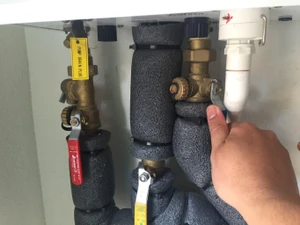
Routine maintenance helps control scale, debris, airflow restrictions, and small problems before they become larger failures. The required work may include cleaning an inlet filter, checking visible connections, inspecting air intake and vent terminations, or descaling the water passages.
Maintenance requirements differ across gas, electric, indoor, outdoor, and portable units. Use the instructions for the exact model rather than a generic online checklist. For broader planning, see Eccotemp’s tankless water heater maintenance checklist.
Installation Environment
The area around the heater can affect its condition. Dust, insects, debris, moisture, freezing temperatures, salt air, and blocked exterior terminations may create problems for certain models.
Keep the installation area consistent with the manual’s requirements. Outdoor and portable water heaters have different placement, drainage, storage, and freeze-protection instructions from indoor whole-home models. Never apply instructions from one product type to another.
How Can You Help a Tankless Water Heater Last Longer?
Start with the manual for your exact model. It contains the applicable maintenance procedures, safety information, service intervals, clearances, and operating limits. Practical steps may include:
- Address recurring error codes instead of repeatedly resetting the unit.
- Check for visible water leaks, corrosion, loose connections, or mineral deposits.
- Keep accessible air-intake and vent termination areas clear where the manual instructs.
- Clean the water inlet filter according to the model documentation.
- Descale or flush the unit at the interval required for its water conditions and manual.
- Arrange professional service for gas, combustion, electrical, venting, or internal component problems.
- Drain and store portable models according to their instructions, especially before freezing conditions.
- Keep maintenance and repair records for future troubleshooting and warranty questions.
If flushing is required for your model, review Eccotemp’s tankless water heater flushing guide before beginning. Use a qualified service professional if the procedure is unclear or requires work beyond normal owner maintenance.
Signs an Older Tankless Water Heater Needs Attention
One symptom does not prove that the entire water heater has reached the end of its life. Several problems can have repairable causes. Still, the following changes deserve attention:
- Hot-water temperature becomes unstable.
- Hot-water flow is weaker than before.
- The unit displays recurring error codes.
- Ignition or startup becomes unreliable.
- Water appears around the cabinet or plumbing connections.
- Corrosion or heavy mineral deposits become visible.
- The same component or operating problem requires repeated repairs.
- Replacement parts are no longer available.
- Repair costs are becoming difficult to justify for the unit’s age.
A technician can help determine whether the cause is scale, restricted flow, a fuel or electrical problem, improper venting, a failed component, or broader deterioration. Eccotemp’s guide to common tankless water heater problems can help you identify what information to collect before requesting service.
Stop using the heater and seek qualified help if you smell gas, find evidence of combustion or venting trouble, see an active leak, or notice damaged electrical components.
Should You Repair or Replace an Aging Tankless Water Heater?
Age should be considered alongside the failure, repair cost, service history, and availability of compatible parts.
Repair may make sense when the unit is otherwise in good condition, the problem is limited to a replaceable component, and the repair restores safe and dependable operation. Replacement may be more practical when the heat exchanger is leaking, failures keep returning, several major components are deteriorating, or compatible parts are unavailable. Consider these questions:
- How old is the water heater?
- Has it received the maintenance required by its manual?
- Is this the first repair or part of a repeating pattern?
- Is the failed component available?
- Does the current heater still match the home’s hot-water demand?
- Is the installation itself contributing to the problem?
- How does the complete repair cost compare with a suitable replacement?
Do not replace a functioning heater solely because it has reached a certain age. A professional inspection can provide a clearer picture of its current condition.
Planning for an Eventual Replacement
Record the model and serial number while the label is still readable. Keep the installation manual, purchase record, service history, and warranty documents together. These details make it easier to confirm the unit’s age, locate parts, and explain past repairs.
If replacement becomes necessary, do not automatically select a model with the same advertised gallons per minute. The new unit should be sized using incoming water temperature, required outlet temperature, simultaneous fixture demand, fuel or electrical capacity, and installation conditions.
You can compare current Eccotemp water heater options after identifying those requirements. Current warranty terms should be confirmed through the applicable product documentation and Eccotemp’s warranty information.
Frequently Asked Questions
Can a tankless water heater last longer than 20 years?
Yes. Some units may operate beyond 20 years with suitable installation, water conditions, maintenance, and available parts. Twenty years is an estimate, not a guaranteed limit.
Does hard water shorten a tankless water heater’s lifespan?
Hard water can create mineral scale inside water passages and the heat exchanger. Following the model’s descaling instructions helps protect water flow and heating performance.
Is it worth repairing a 15-year-old tankless water heater?
It may be worth repairing if the problem is isolated and parts remain available. Compare the repair cost, service history, condition, and expected replacement needs.