 Weekly Deals
 Water Heaters
 Accessories
 Installation
 Parts
Parts
 Protection Plans
 Final Sale




Best Portable Tankless Water Heaters for Camping in 2026
Updated August 2026 – This guide was refreshed with clearer advice on choosing a camping water heater based on flow rate, temperature rise, water source, pump needs, safety, and storage.
The best portable tankless water heater for camping is one that matches your water source, available pressure, expected temperature rise, and shower needs. A compact 1.5 gallons-per-minute model can suit a simple one-shower campsite, but larger groups or stronger-flow setups may need more capacity.
The heater is only one part of the system. You may still need propane, ignition batteries, a suitable water supply, hoses, and a pump when pressurized water is unavailable. In this guide, we’ll explain how to compare portable models and build a practical outdoor hot-water setup.
Key Takeaways
- Choose a heater by its complete campsite setup, not its advertised GPM alone.
- A 1.5 GPM model can support one outdoor shower or another single point of use.
- Colder incoming water requires a greater temperature rise and can reduce usable flow.
- Remote water containers usually require a compatible pump and reliable power source.
- Portable propane models must be operated outdoors according to their manuals.
- Drain and store the heater after use, especially before freezing conditions.
What Is the Best Portable Tankless Water Heater for Camping?
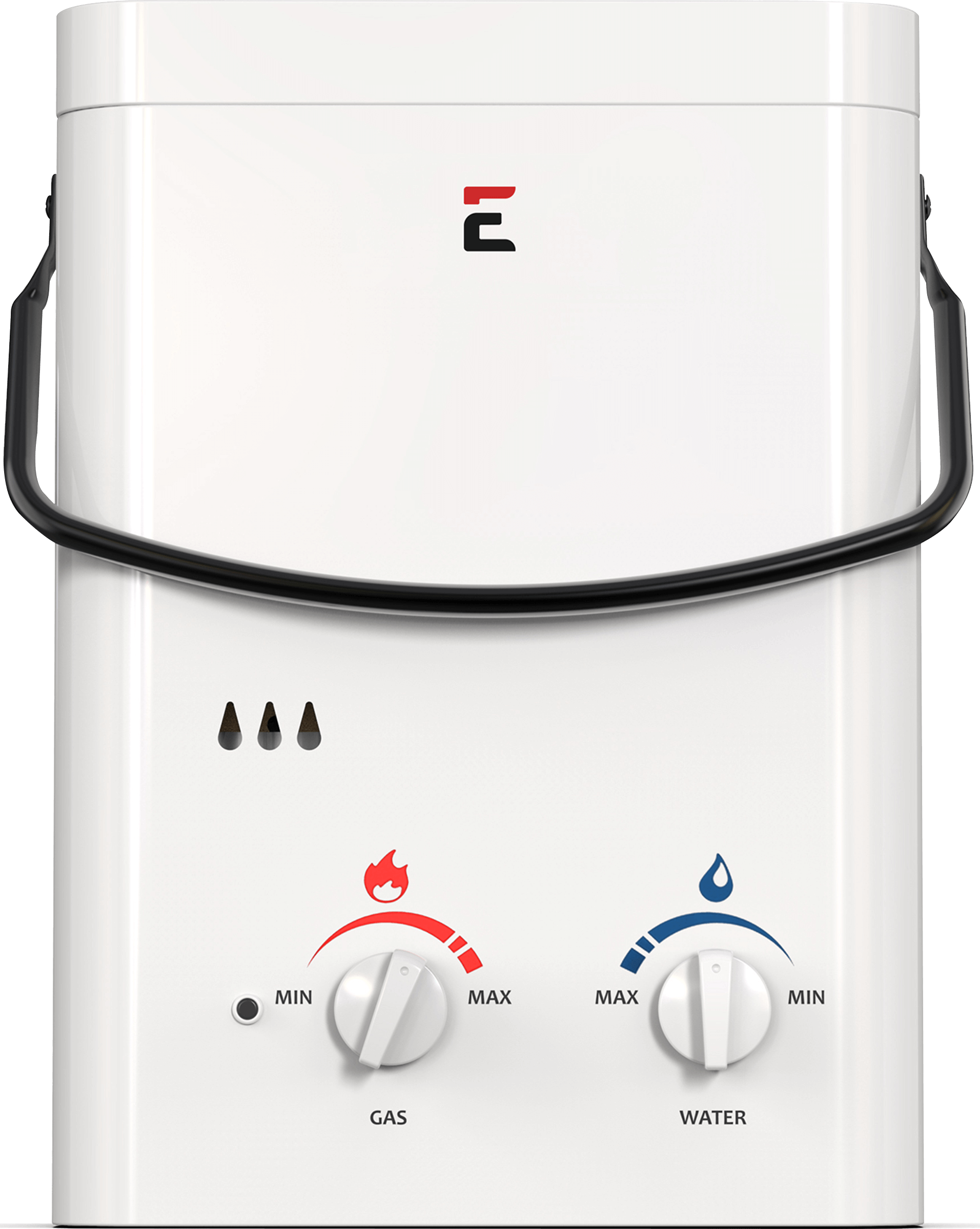
For a typical campsite with one outdoor shower, a pressurized garden-hose connection, and a standard propane tank, the Eccotemp L5 portable water heater is a practical starting point. It provides a rated 1.5 GPM for one point of use and uses two D-cell batteries for electronic ignition.
The best model can change with the campsite. Campers drawing water from a container may need a pump. Colder locations may require slower flow to reach a comfortable outlet temperature. Larger groups may prefer a higher-flow portable model, though that usually means carrying a larger unit and supplying enough water.
Before choosing, map the full route from the water source to the heater and from the heater to the showerhead. This quickly reveals whether the proposed system has sufficient pressure, water, fuel, and space.
Match the Heater to Your Camping Setup
|
Camping situation |
What matters most |
Practical direction |
|
Solo or two-person car camping |
Compact equipment and one shower outlet |
Start by comparing 1.5 GPM portable models |
|
Family or group campsite |
More water use and back-to-back showers |
Compare higher-flow portable models |
|
Campground with a hose connection |
Water pressure and hose compatibility |
Confirm the campground permits hose connections |
|
Remote site with stored water |
Pump pressure, pump power, filtration, and container size |
Plan the pump and water supply before choosing the heater |
|
Cold-weather camping |
Greater required temperature rise and freeze protection |
Check the model’s performance information and drain it completely |
|
High-elevation camping |
Possible reduction in combustion performance |
Check the model’s tested elevation and manual before the trip |
These are selection directions rather than universal sizing rules. Confirm every model’s operating requirements in its current product documentation.
Compare Flow Rate and Temperature Rise Together
Gallons per minute, or GPM, describes water flow. It does not tell you how warm the water will be under every condition. Actual performance depends on the incoming water temperature, desired outlet temperature, water flow, pressure, fuel supply, and the model’s heating capability.
For example, heating 70°F campground water to 105°F requires a 35°F temperature rise. Heating 45°F water to the same outlet temperature requires a 60°F rise. The second situation asks the heater to do more work, so you may need to reduce the flow. Avoid choosing the largest GPM number without checking how the heater performs at your expected temperature rise. A comfortable camping shower depends on both usable flow and temperature.
Plan the Water Source Before Buying
Pressurized campground connection
A potable water connection can simplify the system, but verify the campsite’s rules before attaching a hose. Use drinking-water-safe equipment where appropriate and confirm that the pressure falls within the heater’s allowed range. The L5 product documentation lists an ideal operating range of 20–80 pounds per square inch (PSI). Other portable models may have different requirements.
Portable water container and pump
At remote campsites, a container and pump can supply the heater when no pressurized connection is available. The pump must provide suitable flow and pressure for the chosen model. Eccotemp recommends its EccoFlo 12-volt pump and strainer for low-pressure L5 setups. A pump requires its own compatible power source, so battery ignition in the heater does not make the entire water system electricity-free. Use clean water and appropriate filtration. Do not assume untreated lake or stream water is suitable for bathing, washing dishes, or passing through the equipment.
How Much Water Should You Bring?
Tankless means the heater does not store hot water. It does not mean the water supply is unlimited. A heater flowing at 1.5 GPM could use approximately:
- 4.5 gallons during a three-minute shower
- 7.5 gallons during a five-minute shower
- 15 gallons during ten minutes of total use
Actual consumption will change with the selected flow and how often the showerhead is stopped. Plan additional water for dishwashing, handwashing, pet rinsing, and equipment cleanup. A showerhead with an accessible on/off control can reduce water use between rinses. Confirm that any replacement showerhead or accessory is approved for the model and does not interfere with the required flow.
Why the Eccotemp L5 Fits Many Campsites
The Eccotemp L5 remains relevant to this article because it is intended for temporary outdoor applications such as camping and outdoor showering. Its current product information lists:
- 1.5 GPM rated output
- One point of use
- Standard 20-pound liquid propane tank operation
- Electronic ignition powered by two D-cell batteries
- 20–80 PSI ideal operating range
- A showerhead and hose
- Gas regulator and hose
- Garden-hose quick-connect and adapter
- Tilt-activated safety shutoff beyond 45 degrees
- Testing for use at elevations up to 2,000 feet
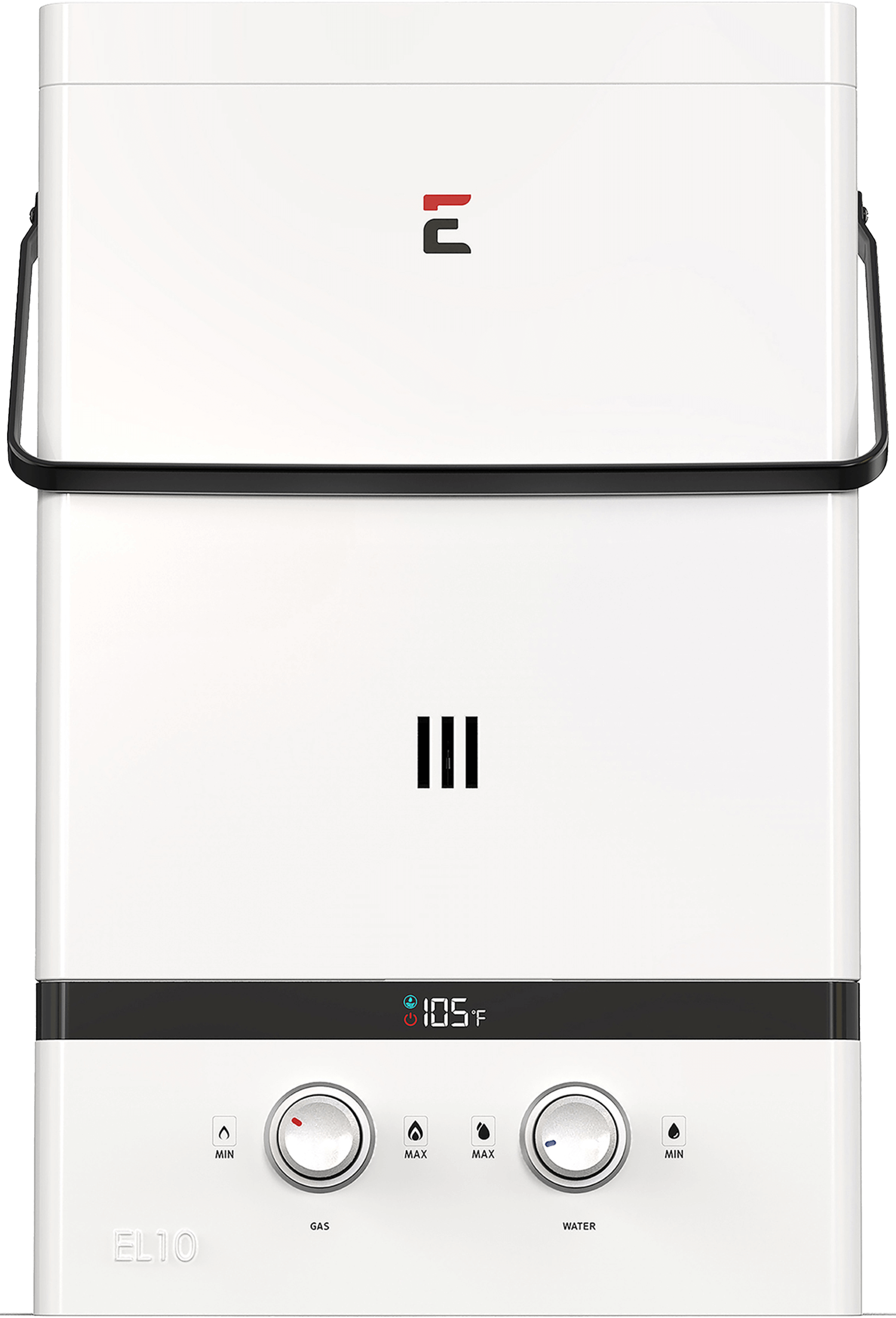
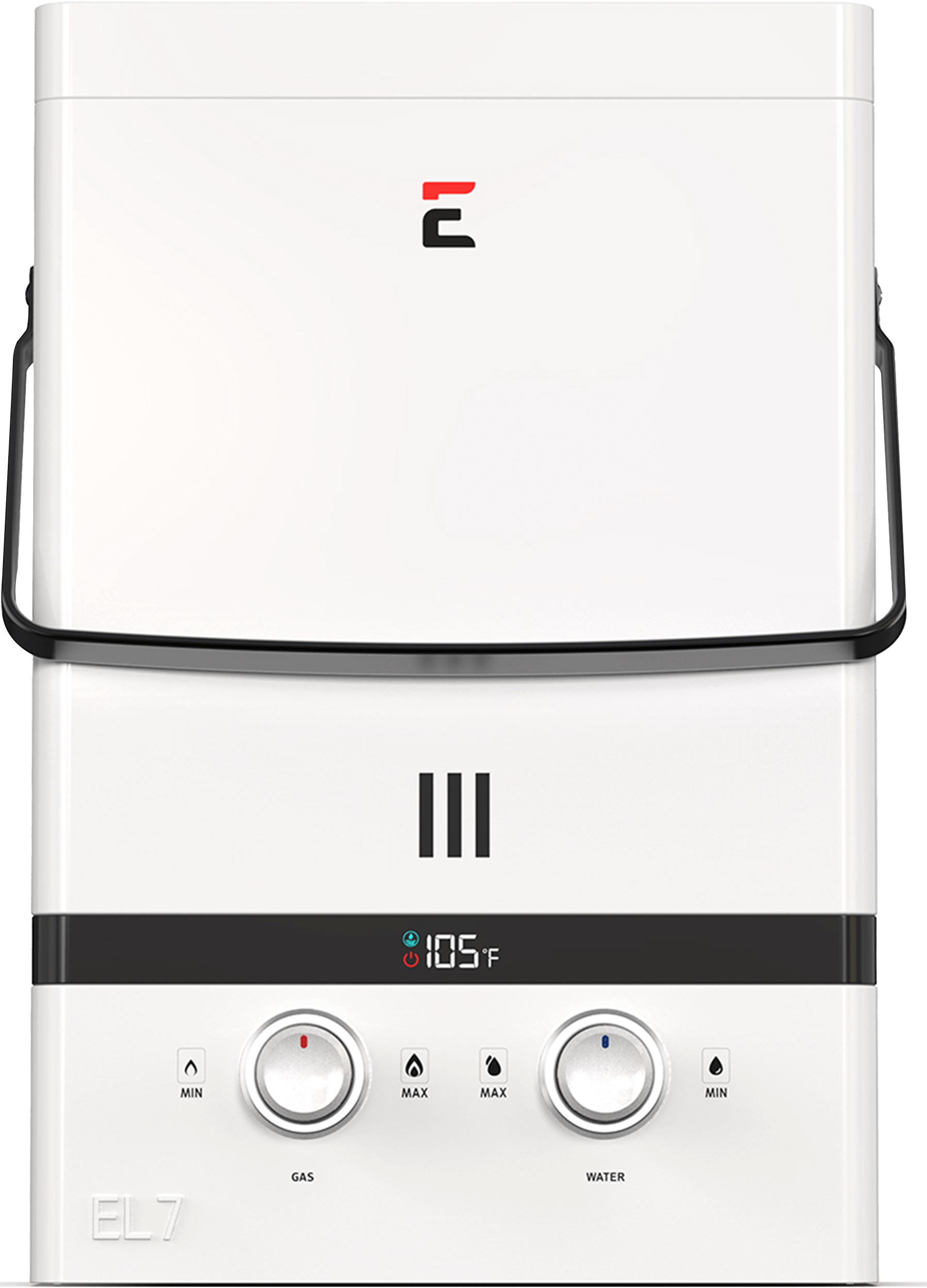
The L5 should not be treated as a permanent outdoor water heater. Its product page states that the built-in rain cap is intended for normal to moderate weather and does not make the unit suitable for permanent outdoor installation. Campers wanting a digital display, a different flow rate, or another equipment package can compare the current portable tankless water heater range. Use the individual product page and manual to confirm current specifications.
A Pre-Trip Compatibility Checklist
Check every part of the system before leaving home:
- Application: Is the heater approved for temporary outdoor use?
- Water source: Will you use a permitted hose connection or stored clean water?
- Pressure: Can the source or pump meet the model’s operating range?
- Temperature rise: How cold is the likely incoming water?
- Water volume: How many showers and cleaning tasks must your supply cover?
- Fuel: Do you have the correct propane tank, regulator, and hose?
- Ignition: Are the correct fresh batteries installed?
- Pump power: If using a pump, how will it receive power?
- Elevation: Is the campsite within the model’s tested range?
- Mounting: Is there a stable, vertical, temporary mounting position?
- Wastewater: Where does the campground require gray water to be collected?
- Storage: Can you drain, dry, and store the heater after use?
Test the complete system outdoors before the trip. This gives you time to find missing adapters, weak batteries, insufficient pump pressure, or leaking hose connections.
Portable Propane Water Heater Safety
A portable propane water heater must be used outdoors and in line with its manual. Do not operate it inside a tent, camper, RV interior, vehicle, bathroom, garage, or another enclosed area. Fuel-burning equipment can produce carbon monoxide, an invisible and odorless gas. The U.S. Consumer Product Safety Commission warns against using fuel-burning camping equipment in enclosed spaces such as tents, campers, and vehicles. Keep these points in mind:
- Use only the approved regulator, hose, fittings, and accessories.
- Inspect connections and hoses before operation.
- Place or hang the heater securely in the position required by its manual.
- Keep the burner and exhaust area clear.
- Do not leave an operating heater unattended.
- Shut off the gas supply after use.
- Let the equipment cool before packing it.
- Stop using the system if you smell gas or notice damaged components.
Portable does not mean suitable for permanent installation. It means the unit can be transported, temporarily set up, operated, drained, and stored as its documentation directs.
Manage Shower and Dishwater Responsibly
Campsites can have strict rules for bathing, hose connections, dishwashing, and gray-water disposal. Check the rules for the specific campground rather than assuming wastewater may drain onto the ground. Some National Park Service campgrounds require campers to collect water from showers, bathing, and dishwashing and place it in a designated gray-water sink or dump station. Use a basin, shower floor, or other collection method when required. Do not allow soap or food waste to enter lakes, streams, or campground water points. Using less water makes collection and disposal easier.
Drain and Store the Heater After Camping
Water left inside a portable heater can freeze, expand, and damage internal components. After use, shut down the system according to the model manual, let it cool, disconnect the supplies, and drain the remaining water completely. Eccotemp’s portable-model guidance calls for draining and storing these heaters in a protected, climate-controlled location after use. Pay close attention when nighttime temperatures may approach freezing. Before storage:
- Remove residual water.
- Allow wet hoses and accessories to dry.
- Remove batteries for longer storage periods.
- Inspect the regulator, hose, fittings, and showerhead.
- Keep dirt, insects, and debris out of the openings.
- Store the heater away from weather and freezing conditions.
For model-specific procedures, use the current Eccotemp L5 manual.
Choosing Your Camping Water Heater
Start with the campsite rather than the product list. Identify the available water source, pressure, incoming temperature, group size, fuel, pump power, mounting location, and gray-water rules. The Eccotemp L5 can suit a straightforward one-shower setup. Campers who want different controls or greater rated flow can compare other current models in the portable range. In every case, the better choice is the model whose documented requirements match the complete outdoor system you can safely transport and operate.
Frequently Asked Questions
Can a portable tankless water heater be used inside a tent or RV?
No. Eccotemp portable propane models are intended for outdoor use. Never operate one inside a tent, RV interior, vehicle, bathroom, garage, or enclosed shower shelter.
Do I need a pump for a camping water heater?
You need a compatible pump when your water source cannot provide the heater’s required pressure and flow. Confirm the pump, power supply, filter, and model requirements together.
Can I leave a portable water heater mounted outside all season?
No. Portable Eccotemp models are intended for temporary use rather than permanent outdoor installation. Drain the unit after use and store it away from weather and freezing conditions.