 Weekly Deals
 Water Heaters
 Accessories
 Installation
 Parts
Parts
 Protection Plans
 Final Sale





What Size Tankless Water Heater Does a Family of Four Need?
A tankless water heater for a family of four often falls within the 6 to 8 gallons-per-minute range, but that range is only a starting point. The correct size depends on how many hot-water fixtures your family uses at once and how much the incoming water must be heated.
A 7 GPM model might handle several fixtures in a warm climate but deliver less hot water during a cold winter. In this guide, we’ll calculate peak demand, temperature rise, and the capacity your household actually needs.
Key Takeaways
- Size a tankless water heater by peak simultaneous demand, not household size alone.
- Add the flow rates of fixtures your family may use at the same time.
- Subtract incoming water temperature from the desired outlet temperature to calculate temperature rise.
- A larger temperature rise reduces the flow a heater can deliver.
- Check a model’s performance chart at your required temperature rise before choosing it.
- Have a qualified professional confirm fuel, electrical, venting, and installation requirements.
What Size Tankless Water Heater Is Usually Right for a Family of Four?
Many four-person households begin their search in the 6 to 8 GPM range. A household that normally uses one shower and one faucet at the same time may need less capacity. Two simultaneous showers or a shower running with a dishwasher can require more.
Do not select a unit from its maximum advertised GPM alone. Tankless water heater output changes with temperature rise. A model advertised at 6.8 GPM under a moderate temperature rise will produce less at a higher rise.
The best size is the model that can supply your calculated peak flow at your home’s required temperature rise. The U.S. Department of Energy’s Building Science Education program recommends using these same two factors when sizing a gas-fired tankless water heater.
Step 1: Calculate Your Family’s Peak Hot-Water Demand
Peak demand is the total flow from the hot-water fixtures your family is likely to operate simultaneously. You do not need to add every fixture in the house. Build a realistic busy-period scenario instead.
Check fixture labels, appliance documentation, or measure the actual flow where practical. Current fixtures may use less water than older fixtures. The U.S. Environmental Protection Agency states that standard showerheads use 2.5 GPM, while WaterSense-labeled showerheads use no more than 2.0 GPM. Use this worksheet as a starting point:
|
Possible simultaneous use |
Example flow rate |
Include in your total? |
|
WaterSense showerhead |
Up to 2.0 GPM |
If used during the peak period |
|
Standard showerhead |
About 2.5 GPM |
If used during the peak period |
|
WaterSense bathroom faucet |
Up to 1.5 GPM |
If hot water is running |
|
Dishwasher or washing machine |
Check appliance documentation |
If it fills during the same period |
These are reference figures, not universal flow rates. Fixtures, appliances, water pressure, and the mix of hot and cold water can change actual demand.
Example Peak-Demand Calculation
Suppose your family may use two WaterSense showerheads and one bathroom faucet at the same time:
- Shower 1: 2.0 GPM
- Shower 2: 2.0 GPM
- Bathroom faucet: 1.0 GPM
- Total estimated peak demand: 5.0 GPM
Your chosen model must deliver at least 5.0 GPM at the required temperature rise. Selecting a heater based only on a 6.8 or 7.0 GPM headline rating could give an inaccurate result if that rating was measured under warmer inlet conditions.
Step 2: Calculate the Required Temperature Rise
Temperature rise is the difference between incoming cold-water temperature and the heater’s selected outlet temperature.
Use this formula:
Desired outlet temperature − incoming water temperature = required temperature rise
If water enters the home at 50°F and the heater is set to 120°F:
120°F − 50°F = 70°F temperature rise
The incoming temperature should reflect the coldest conditions in which the heater must meet your family’s demand. Seasonal water temperatures can vary, so a winter calculation gives a safer sizing basis for year-round use.
Do not assume that every family of four has a 50°F to 70°F temperature rise. Family size does not determine this value. Climate, season, water source, plumbing conditions, and selected outlet temperature do.
Step 3: Match Both Numbers to the Performance Chart
Once you know peak flow and temperature rise, compare both figures with the manufacturer’s performance data.
For example, a household needing 5 GPM at a 70°F rise must choose a unit rated to provide at least that output under those conditions. A heater’s maximum GPM may have been measured at a smaller rise, such as 35°F or 45°F.
This difference matters. A heater has to add more heat to every gallon when incoming water is colder. The same model may provide a higher flow in a warm region and a lower flow during a northern winter.
Check the manual or product performance chart rather than relying on household-size labels such as “ideal for four people”.
How Climate Changes the Size You Need
Cold incoming water places a greater heating load on the unit. Families in colder regions may need more heating capacity to maintain the same simultaneous flow as families in warmer climates.
Imagine two homes with identical 5 GPM peak demand and a 120°F outlet setting:
|
Incoming water |
Required rise |
Sizing effect |
|
70°F |
50°F |
Lower heating demand |
|
50°F |
70°F |
Higher heating demand |
|
40°F |
80°F |
Substantially higher heating demand |
This is why two four-person households can require different tankless water heater sizes. Local incoming-water conditions can be more important than the number of people living in the home.
How Usage Habits Affect a Family of Four
Back-to-back showers do not create the same sizing challenge as simultaneous showers. A correctly sized tankless water heater can continue heating water during consecutive use. Its main capacity limit appears when the combined flow at one moment exceeds what the unit can heat.
A family that staggers showers, laundry, and dishwashing may be comfortable with a lower flow capacity. A family with two bathrooms used at once may need a higher-output model.
Think about your busiest 10 to 15 minutes, not total daily consumption. Include planned bathrooms, larger fixtures, or appliances if household demand may increase soon.
What Do BTU Ratings Mean for Gas Tankless Water Heaters?
BTU means British thermal unit. For a gas tankless water heater, the BTU-per-hour input rating indicates the unit’s heating input rather than a guaranteed household flow rate.
Higher input can help a model maintain more flow through a larger temperature rise, but BTU should not be used by itself. Heat-exchanger design, controls, efficiency, inlet temperature, outlet setting, altitude, fuel supply, and other model-specific conditions affect performance.
The existing recommendation of 145,000 to 180,000 BTU for every family of four was too broad. Use the manufacturer’s flow-versus-temperature-rise data to confirm actual capacity.
Gas or Electric: Does the Sizing Method Change?
Both gas and electric tankless water heaters must be sized for simultaneous flow and temperature rise. The installation requirements differ.
Whole-home gas units require the correct fuel type, gas supply, combustion provisions, and model-approved venting or outdoor placement. Whole-home electric units can place a large load on the electrical system and may require substantial panel, breaker, and wiring capacity.
Do not choose a model until a qualified professional confirms that the property can support it. The final installation must follow the product manual and applicable local codes.
Choosing an Eccotemp Model for a Four-Person Household
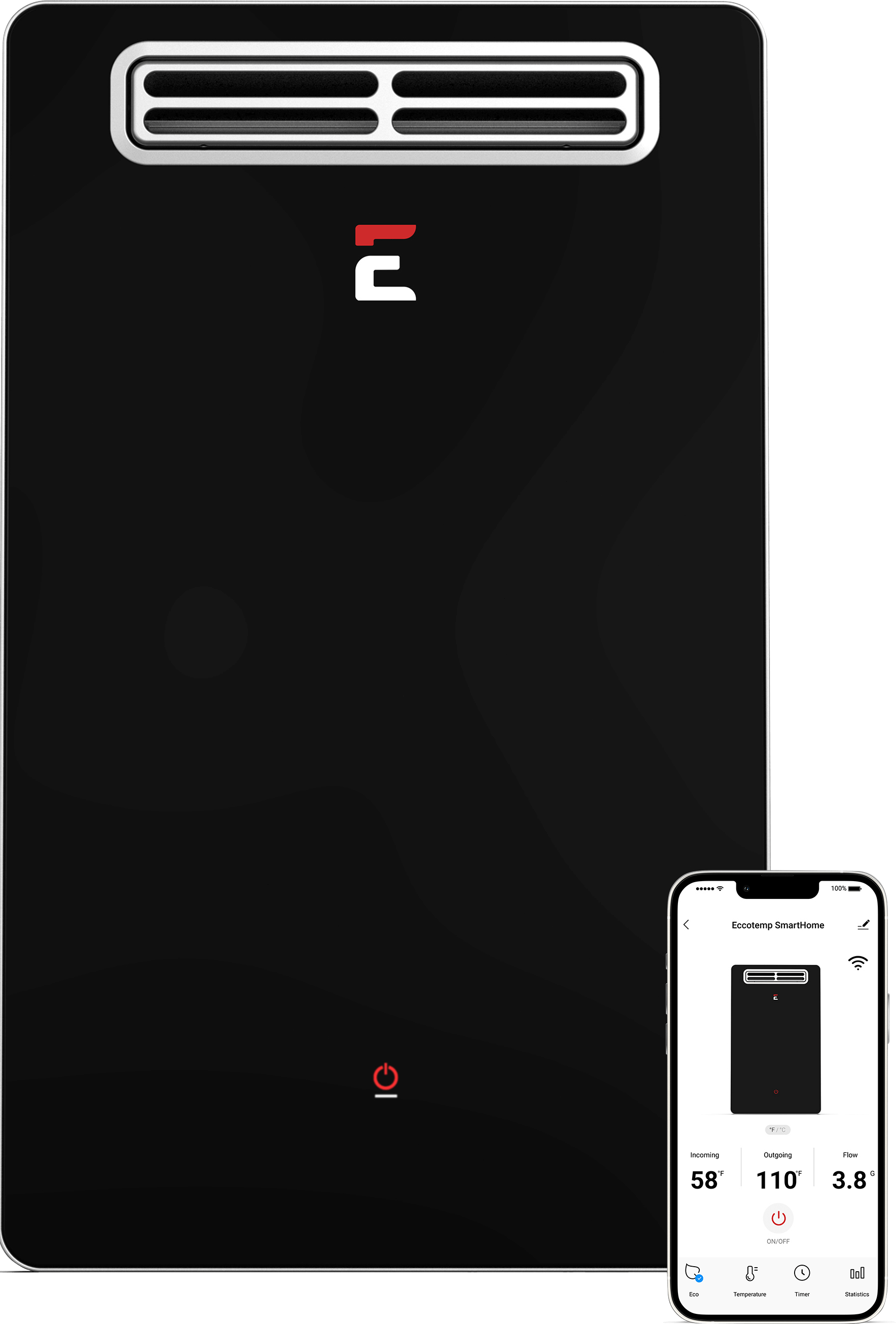
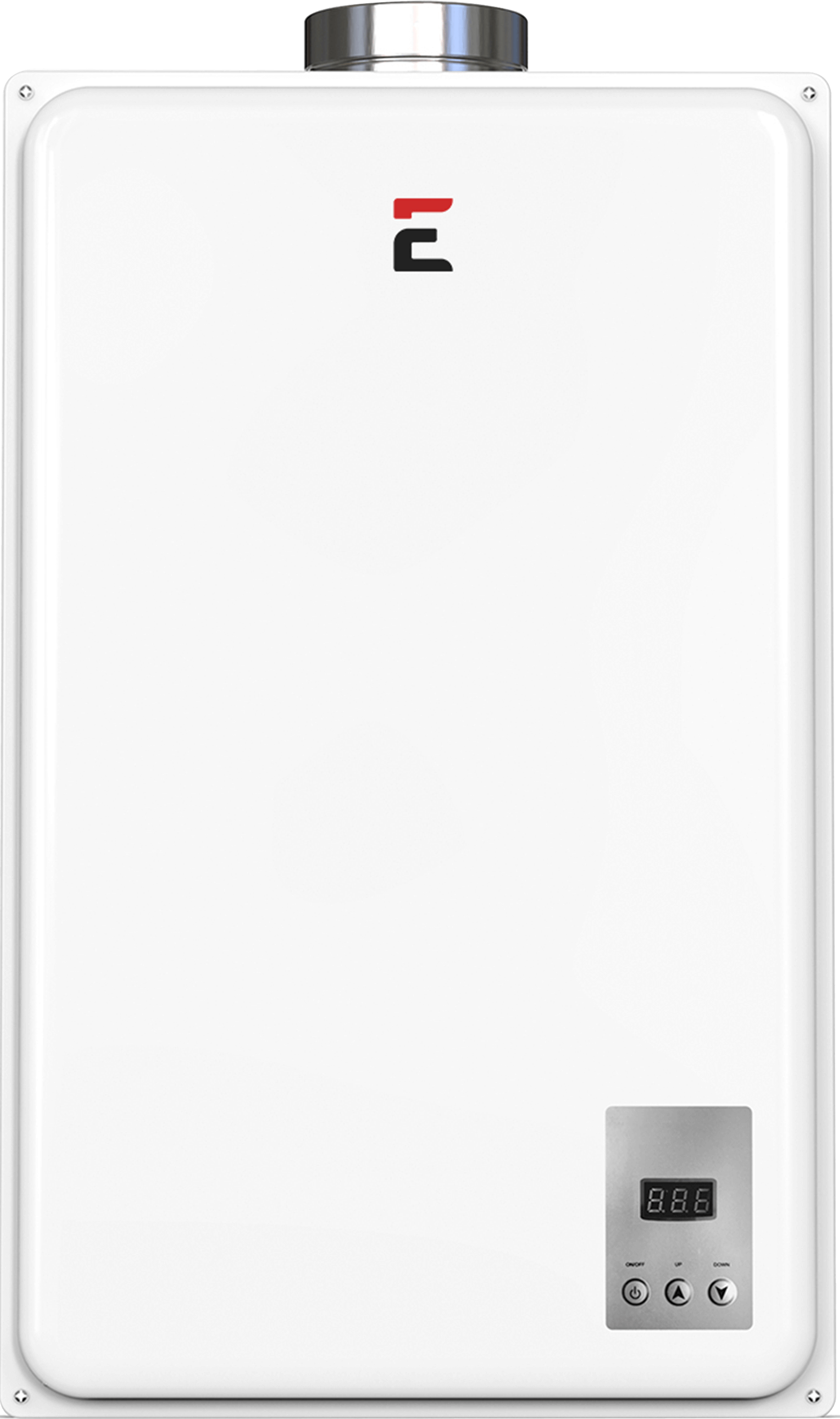
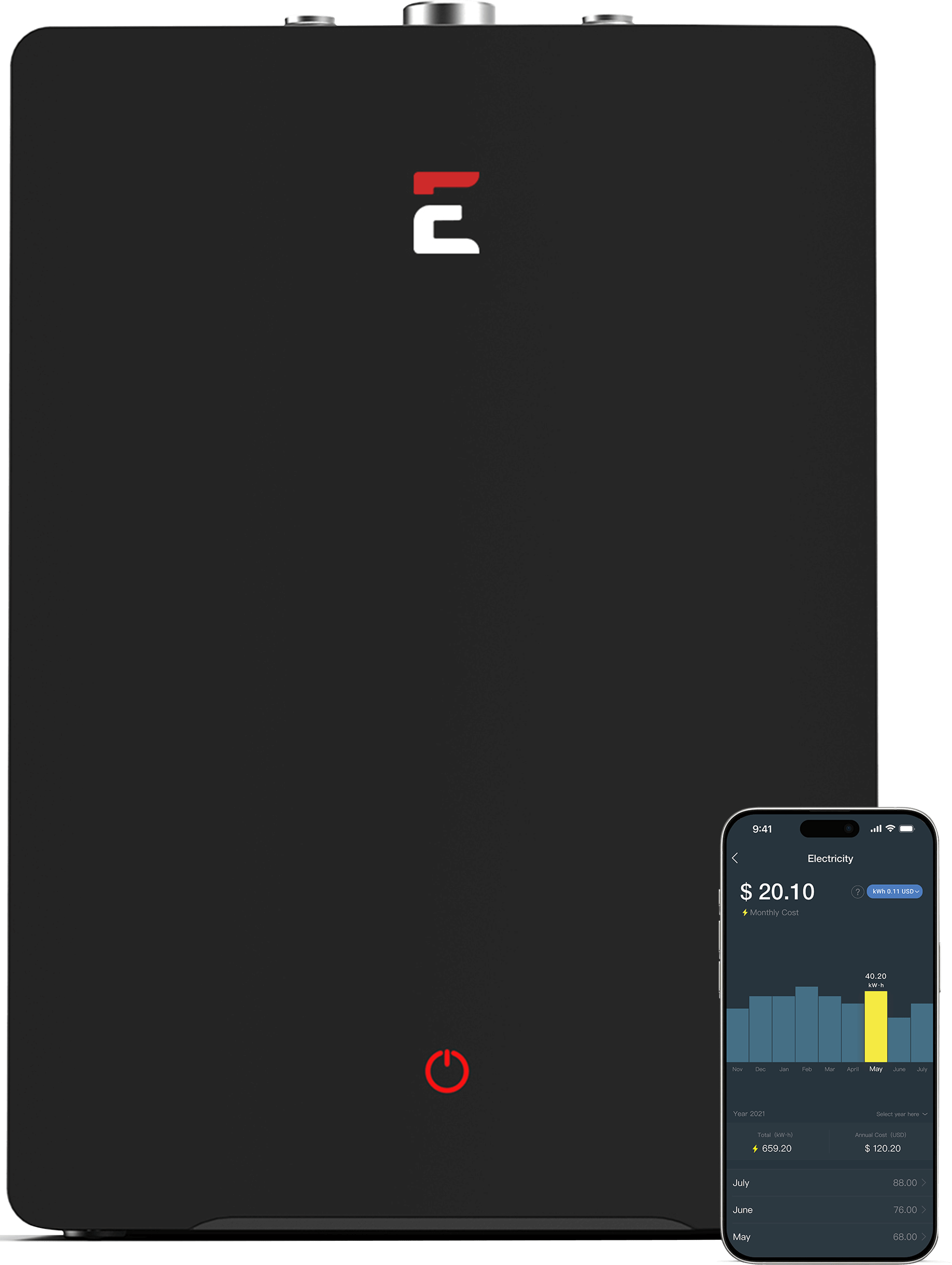
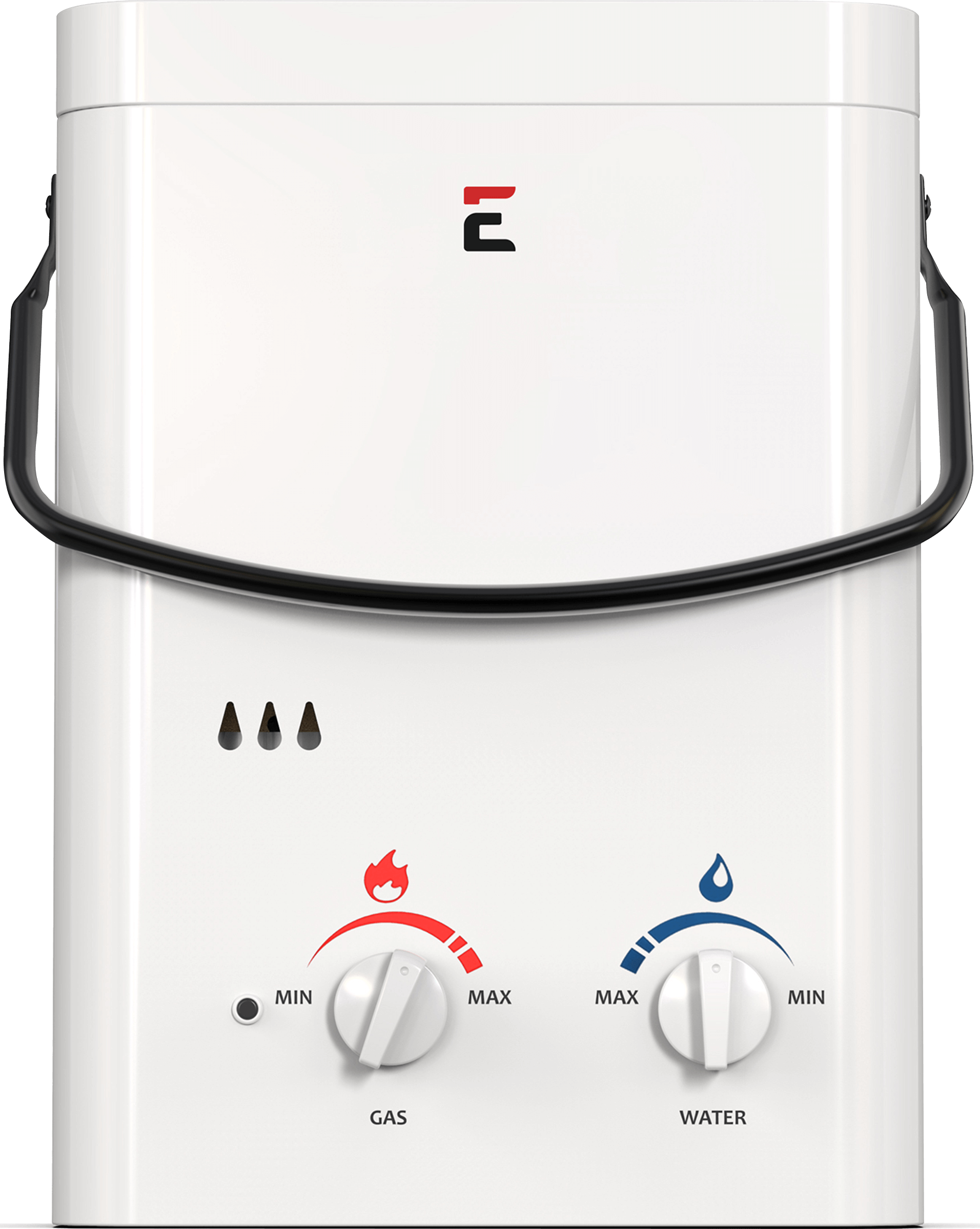
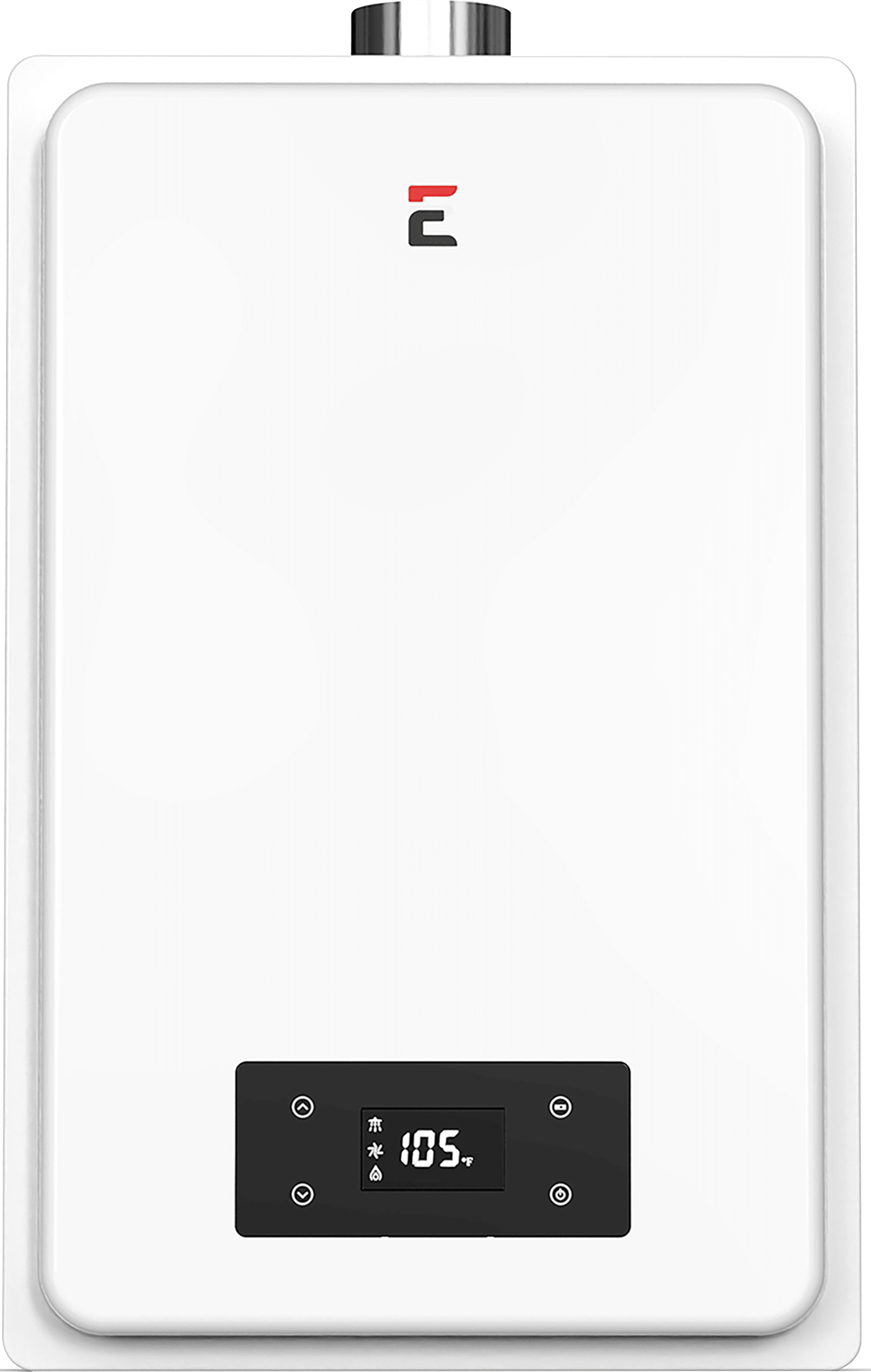
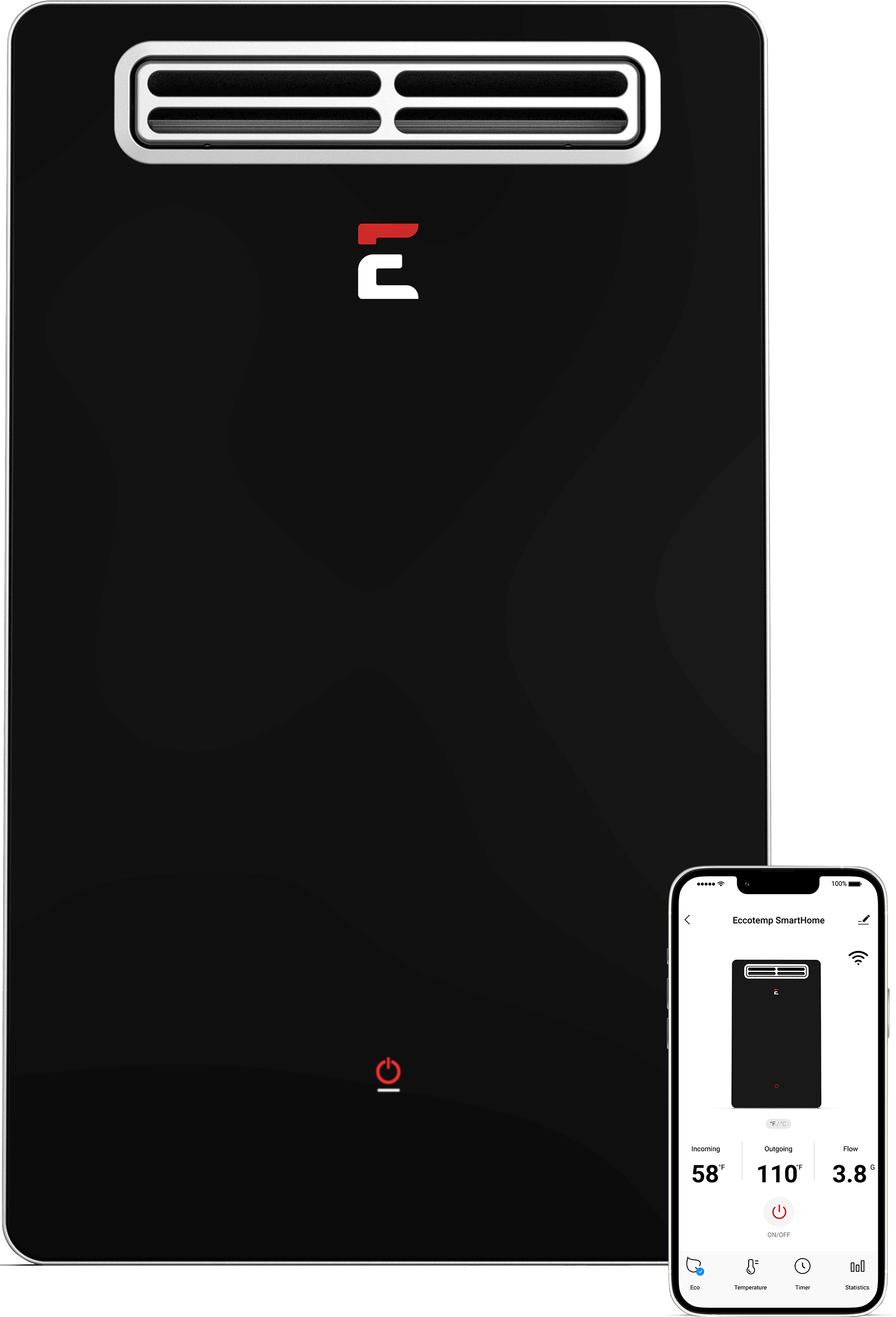
Eccotemp offers current gas tankless water heaters with different flow capacities, fuel types, and indoor or outdoor configurations.
For example, selected Eccotemp whole-home models have maximum ratings around 6.8 to 7.0 GPM. Those headline ratings do not mean that every model will provide the same flow at a high temperature rise. Review the current product specifications and performance information for your calculated conditions.
A qualified installer should confirm:
- Required flow at the winter temperature rise
- Natural gas or liquid propane compatibility
- Available gas or electrical capacity
- Indoor or outdoor installation requirements
- Venting, clearances, altitude limits, and local codes
- Water pressure and service access
A Simple Final Sizing Checklist
Before selecting a tankless water heater for your family of four:
- Identify the busiest simultaneous hot-water scenario.
- Find or measure the flow rate of each included fixture.
- Add those flow rates to calculate peak demand.
- Find the lowest expected incoming water temperature.
- Subtract it from the desired outlet temperature.
- Check the model’s output at that temperature rise.
- Confirm the property can support the required fuel, electrical, venting, and plumbing setup.
- Have a qualified professional verify the final selection and installation plan.
This approach gives you a more reliable answer than choosing a heater from family size or maximum GPM alone.
Frequently Asked Questions
Is a 7 GPM tankless water heater enough for a family of four?
It can be, but confirm its output at your required temperature rise. Two simultaneous showers and another fixture may exceed its cold-weather capacity.
How do I calculate the tankless water heater size I need?
Add the flow rates of fixtures used simultaneously, then calculate temperature rise by subtracting incoming water temperature from the desired outlet temperature.
Does a colder climate require a larger tankless water heater?
Usually. Colder incoming water creates a larger temperature rise, which reduces available flow. Compare each model’s performance chart using expected winter inlet conditions.